Gary's new website

Showing posts with label HTMA-zinc. Show all posts

Friday, June 29, 2012

My son seems to have a continual cold which leads to asthma


Earlier in the year I had a hair sample done and taken your recommendations on treatment.

My son seems to have a continual cold which leads to asthma.

I am keen for you to do your magic on him too.  I wanted to check before I purchased a hair sample kit if that was appropriate for him.  He is 6 years old.

Can you please advise.
__________________________
Gary:

HTMA of Child's Mother
The HTMA (Hair Tissue Mineral Analysis) of a child usually is a near-copy of the Mother's, except the child's often is more extreme of her patterns.

So, when we look at the Mother's HTMA to the left, we can see patterns that indicate a tendency to suffer viral infections and asthma.

These are low magnesium to calcium and an overall deficiency in magnesium.  When molybdenum is low and zinc is high we can assume that there is a deficiency in zinc and, therefore, vulnerability to viral infections (high zinc, especially in the presence of low molybdenum means loss of zinc from the tissues and it being deposited in the hair).

If you take out the peaks of calcium, copper zinc, chromium and cobalt we have the appearance of a person who is running on empty.  We can assume her son will be lower overall as well as having more extremes such as higher calcium and lower magnesium.

Due to their faster metabolism children are more sensitive to imbalances, including excesses and deficiencies.

Yes, I recommend that the wee boy does have a HTMA completed.  But, in the absence of a HTMA I would recommend that he follows the dietary and supplementary programme that has been recommended for Mother.  Any supplements are adjusted appropriately for size and also to take account that most children have difficulty swallowing pills.


_______________________________________
About this website
The advice in these articles is given freely without promise or obligation.  Its all about giving you and your family the tools and information to take control of your health and fitness.

Sunday, June 17, 2012

Kiwi women are dying of broken hearts


"Healthy women in their 20s were vulnerable to arterial tearing, a rare condition understood to be genetic, but doctors were still unsure of its cause, Grines said. "There's a genetic predisposition for tearing of major arteries, but there's much less known about smaller arteries. We're trying to collect information and we're doing blood tests to see if it's genetic."
__________________________
High zinc on the HTMA represent zinc loss
from the body, as well as estrogen dominance.
Gary:
I guess the idea of Kiwi women dying of broken hearts is a romantic and catchy idea that makes for good press copy, but I think they are way off the mark.  Boo, hoo, hoo!  

More research is proposed. Gosh! I find these articles frustrating to read.

The author's reference to arterial tearing in the article grabbed my attention.  Its a condition that I have come across several times in high performance female athletes and, more rarely, in male athletes.  The treatment for this condition is a mix if retirement from competition and/or grafting pig or bovine arterial tissue over the lesion.  This surgery is very high-risk, costs at least $30,000 and, in my experience, does not work - the condition comes back, if it ever went away!  The athlete retires.  This is because the real underlying causes have not been dealt with.

What happens is the artery is becoming scarred and inflexible to the point of tearing (cracking).  It is usually seen in female endurance athletes at a point such as the groin or the back of the knee.  It is at such points in the body that extreme repetitive flexing and extending of the arteries happens, such as when running and cycling.  

Think of the artery as being like a plastic garden hose that has been left out in the sun for too long and perished.  If it is is flexed repeatedly, it will crack and eventually leak.  This is what is happening to the arteries of these young women.  But why?

Why is arterial scarring and tearing more common in young women?


First, its not a genetic problem, unless you think that being female is a problem.  I believe the cause is very simple: Zinc deficiency combined with excessive flexing of the arteries during to extreme exercise, such as happens in professional cycling or competing in Iron Man.

Zinc is essential for healthy connective tissue.  

When zinc is deficient connective tissue becomes thin and weak. Instead of being like bouncy, stretchy lycra fabric, the tissue becomes more like a rotten sail cloth. Instead of flexing like a trampoline bed, it tears apart. The best example of this is the sub-dermal tearing of the skin in a zinc deficient person, causing permanent stretch marks.

Incidentally, if the deficiency is due to a relative excess of copper relative to zinc in the body, then the stretch marks will be silver.  If there is an absolute deficiency of zinc in the body, then the stretch marks will be purple.

Exercise depletes zinc

Zinc is used by the body for a number of purposes, including tissue repair and healing.  An athlete is constantly causing tissue damage and therefore requires much, much more than the average person.  More than can be supplied even with the best of diets.  Every athlete I have tested, including myself, is low in zinc.

Our foods are deficient in zinc.

New Zealand soils have little or no zinc.  Therefore, unless zinc has been added to the soil our crops and animals are poor sources of zinc.  The best sources of zinc come from the offal parts of animals (assuming the animal is not zinc deficient).  Few people eat these parts nowadays.

Young women need much more zinc than men.

The female hormones, estrogen and progesterone, require zinc and copper for their manufacture.  Copper and zinc must also be in careful balance for there to be balance between estrogen and progesterone.  High copper, such as occurs when on many contraceptives, the most obvious being a copper IUD, tricks the body into thinking it is pregnant.  The consequence is an imbalance between copper and zinc - a relative deficiency of zinc to copper.  Women need more zinc as compared to men for this reason.  

This imbalance between copper and zinc will predispose the woman to collagen tearing.  This will be seen as young women being more susceptible to unsightly stretch marks, ligament and tendon tears, stress fractures, scoliosis and non-traumatic disc prolapse.

Female contraceptives have a lot to answer for.

Supplementing with zinc.

Is easier said than done.  Zinc is a funny element: The less you give, the more you absorb.  The more you give, the less you absorb.  So, the key to supplementation is to take small amounts of zinc throughout the day every day.  I have found that the best way to do this is through the Super Smoothie with extra added zinc, which you drink a glass of several times a day.

Is there going to be a gene therapy solution?

Come on! - Name me one gene therapy cure that has come from the countless millions that has been spent to date on searching for the genes that cause disease?  I can't think of one - can you?  I am becoming a real cynic of these gene research programmes.  I feel they are distracting all of us from what we already know, including the practical solutions.  At the same time millions of precious health funds, much of it donated, is being diverted into endless and extremely costly research which may never produce a practical, affordable health benefit.

When these genetic studies are reported, there is always the recommendation that there needs to be even more research into the genetic causes.  Its an endless gravy train for these researchers and the institutions they represent.  Of course there should be research into these matters but this should not be at the cost of millions of dollars being diverted from practical, grass-roots health interventions.

Yes, women, by virtue of their hormones, and therefore, their genes, need more zinc.  Instead of wasting our time trying to find the genes that predispose a woman to arterial tearing, let's get on with correcting the root causes - Contraceptive use, zinc deficient diets and poor training programmes and competitions that thrash these young women into a state of chronic exhaustion.


_______________________________________
About this website
The advice in these articles is given freely without promise or obligation.  Its all about giving you and your family the tools and information to take control of your health and fitness.

Monday, July 04, 2011

Why do your hands go purple when they are cold?

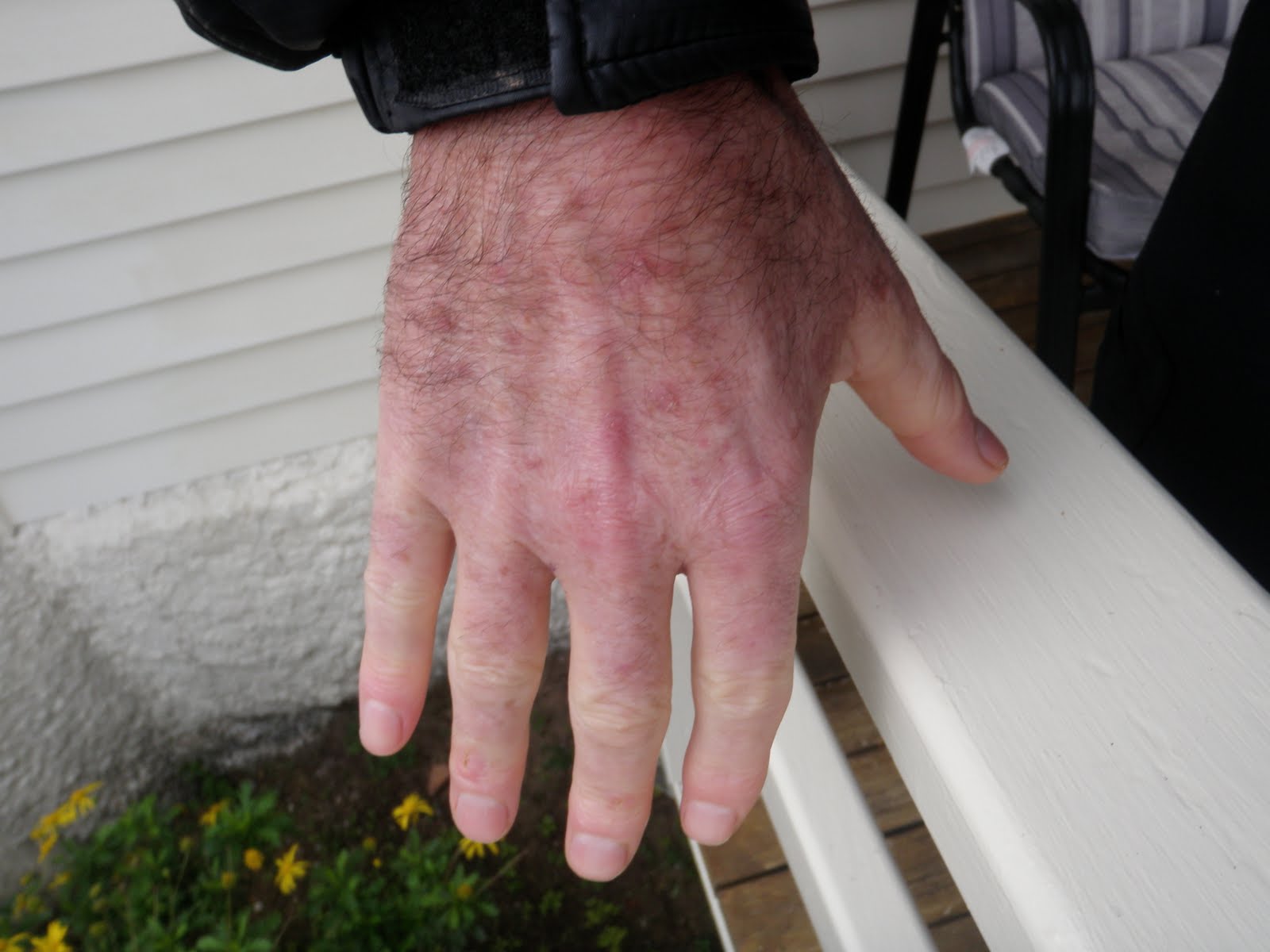
Have a look at my hands in this video which was made in 2007.  I was seriously zinc deficient and it sure did show. Despite being indoors with heating on, my hands have a distinctly purple look about them.  Coincidentally, the skin on the back of my hands was fragile and easily skinned and very, very slow to heal.


Now, have a look at the same hairy hand, today four years later and four years older, outside in freezing weather while the rest of me is bundled up in a fat down ski jacket.  If ever my hands should go purple it is in these conditions.  While there is still some discoloration it is nothing like before.  I have also noted far less tendency to damage the skin and it heals much faster.

I put this improvement down to getting the balance between zinc and copper about right but this has taken several years of trying and still a work in progress.  Zinc and copper are critical for the regulation of many important functions in the body, including fluid flow and collagen synthesis.  If there is a zinc deficiency, tissues will tear, rather than stretch.  This is why zinc deficiency is the cause of stretch marks, slow growth, poor healing and ulcerations.  One characteristic of zinc deficiency is the purple appearance that develops and is most apparent under the eyes and in the skin of the hands and feet.  This purple appearance will show as purple scars and purple stretch marks where there is an absolute deficiency of zinc.

People, such as athletes, who do hard physical exercise need bucket loads of zinc.  Years of "excessive-compulsive" exercise explains my zinc deficiency.  Zinc is in high demand whenever there is tissue damage, be it from injury or just hard exercise.  Zinc deficiency causes a loss of smell and taste and explains the often marked loss of appetite in patients following a severe physical injury or major surgery when zinc reserves are severely stressed.

Merely replacing zinc by way of a supplement may yield less than pleasing results.  This is because there are many other factors at play.  For example, there may be a lack of pyridoxine and/or molybdenum which will prevent the proper utilisation of zinc.  Even the tiniest amounts of lead and mercury interfere with zinc metabolism and excess copper will drive zinc out of the cells.  The best way to determine your nutrient requirements, including zinc is to get a Hair Tissue Mineral Analysis completed and use it to guide your diet and supplementation.  Here is a good place to start to get an idea of the power of the Hair Tissue Mineral Analysis.


_______________________________________
About this website
The advice in these articles is given freely without promise or obligation.  Its all about giving you and your family the tools and information to take control of your health and fitness.  Please give me your support by subscribing to my free email updates. Please shop at my Online Store. Please encourage your family and friends to do the same. While we may not always be able to compete with the big operators on price, we aim to more than compensate through personal service!

Your email address:

Powered by FeedBlitz
Do you have a question?  Email Gary: gary@myotec.co.nz. Include any relevant background information to your question.  Please be patient and be aware that I may not be able to answer every inquiry in detail, depending on workloads (My paying clients take precedence!). I will either reply by email or, most likely, by way of an article (Personal identifying details will be removed before publication).

Monday, August 16, 2010

Getting the zinc taste test done where you live and how to interpret the results

Hi Gary,
I have visited 2 other places. Amcal haven't marketed that test in 5 years so if they do have the solution its likely to be out of date (from what I found out). I actually got it done at a herbal dispensary and a Health 2000 store. The results were quite similar. It begins with no taste and then builds to a kind of metallic taste (or mild anti bacterial taste). This usually takes about 2 to 5 seconds and stays for a while. Its not an overpowering horrible taste but is unpleasant.
From talking to the people it seems that they think I am slightly deficient and one recommended a solution over tablets. They said that if I tasted nothing then I have no Zinc in me and if it was a terrible taste then I have plenty?
"J"
__________________________________
Gary:
Four Seas Seaweed Hot & Spicy Instant Noodle -...Image via WikipediaZinc deficiency is one of the most common health issues I see daily.  This is increasingly common in young people who are increasingly raised on a diet consisting mostly of noodles, pasta, white rice, refined cereals and chicken.
First we had Gen X, Gen Y and now we have the In Generation: The Instant Noodle Generation.  Characterised by numerous health problems associated with chronic nutrient deficiencies.
The In Generation: Weakly and with Poor Health

Rather than granting the inventor of the Instant Noodle with medals, I think he should have been lined up and shot for crimes against humanity.

Thursday, July 22, 2010

How is molybdenum and zinc connected?

High zinc, low Molybdenum:
Poor zinc utilisation. Zinc deficiency.
I was wondering how molybdenum and zinc are connected?

Nicole
________________________________
Gary:
When zinc appears to be high relative to the overall pattern of minerals on the Hair Tissue Mineral Analysis and where Molybdenum is noticeably low, we can assume the body is failing to properly utilise dietary zinc.

Molybdenum aids the utilisation of zinc, so we can assume that the pattern of high zinc relative to molybdenum indicates that zinc is being lost from the body at an excessive rate.