Gary's new website

Showing posts with label cycling. Show all posts

Wednesday, June 04, 2014

French cyclists get paid to commute

That scenic ride along the Seine? You could get paid for it if you're French and it's part of your work commute.     Photo: Pranav Babu Photography/Flickr
I's a good day to be French: The country has officially launched a six-month experiment in paying people who bike to work. Twenty companies and institutions have signed on to pay their staff the equivalent of about 34 cents per kilometer biked to work.
More:
http://www.outsideonline.com/news-from-the-field/French-Cyclists-Celebrate.html


This would work in Wellington!


About this website 
The advice in these articles is given freely without promise or obligation. Its all about giving you and your family the tools and information to take control of your health and fitness.
Candida and Fungal Infections? Gary Moller recommends you explore this programme: Click Here!

Thursday, July 18, 2013

Here is an interesting analysis of doping in athletics and sprinting


Cycling and sprinting. Which sport is worse for doping?

While cycling's Team Sky have been forced to deny doping, the athletics world has seen the two fastest men this year fail drugs tests. How far does doping affect each sport?
Lance Armstrong
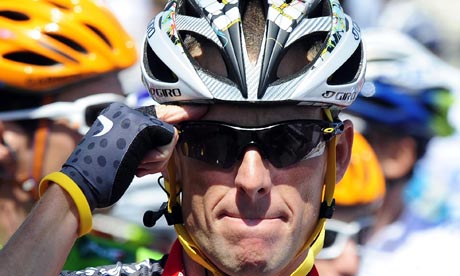
Seven time Tour De France winner Lance Armstrong, who admitted to doping earlier this year. Photograph: John Giles/PA
It has not been a good few weeks for the reputations of cycling and 100 metre sprinting.
The ghost of Lance Armstrong's dope-fuelled achievements has haunted Team Sky and its British Tour de France leader Chris Froome all the way on their trip through the mountains.


About this website 
The advice in these articles is given freely without promise or obligation. Its all about giving you and your family the tools and information to take control of your health and fitness.
Candida and Fungal Infections? Gary Moller recommends you explore this programme: Click Here!

Tuesday, May 18, 2010

Myra Moller Mixes it With the Males - Cycling

MEDIA RELEASE

Myra Mixes it With the Males

Young Myra Moller who is hopeful of gaining a place in the London Olympics gave some of the boys a lesson on how to ride during Sunday’s road race at Broadmarsh.
Forty one riders of ages between 13 and 73 were at the start of the 40 km scratch race which was won by Daniel Furmston in a time of 1:01:59.

Myra Moller rode strongly with the front riders as unrelentingly dropped rider after rider on the undulating course to finish 6th with the same finishing time as the winner.

Results:
D Furmston J Atkinson Z Wright J Avens C Flakemore M Moller D Pulbrooke P Staley N Earle H West S Rossendell D Eldridge A Hunt S Revell P Grainger B Plumpton D Pitt T Watt J Joyeux A Flakemore G Bennetts S Page I Riley R Hartridge M Oakley Browne D Coombes J Padas H Woods P Keenan E Gee

J Brown J Stagg C Roper K Fuller

For earlier article please go here.
_______________________________________
About this website
The advice in these articles is given freely without promise or obligation.  Its all about giving you and your family the tools and information to take control of your health and fitness.  Please give me your support by subscribing to my free email updates. Please shop at my Online Store. Please encourage your family and friends to do the same. While we may not always be able to compete with the big operators on price, we aim to more than compensate through personal service!


Your email address:


Powered by FeedBlitz
Do you have a question?  Email Gary: gary@myotec.co.nz. Include any relevant background information to your question.  Please be patient and be aware that I may not be able to answer every inquiry in detail, depending on workloads (My paying clients take precedence!). I will either reply by email or, most likely, by way of an article (Personal identifying details will be removed before publication).

Wednesday, December 03, 2008

A summer training programme for triathlon and running a marathon

"Hi Gary
What would be the best approach?

A new schedule for each month, reassessed according to progress, or a full 5 month programme?

Photo: Gary making his move during one of the PNP club's 40km cycle races around Aotea Lagoon circa 1980.  From 1978-83 he averaged 3rd-4th placing in multisports races in NZ (run, bike kayak), due mainly to experience with club-based racing in all three disciplines.  Message: If you want to get good at a discipline, then you really should be competing in that sport against better competition.

Can train during lunch breaks (limited to 50mins) and could train in the mornings if required. Evenings are mostly free but constrained by transport, so training best done at home.

Would like to get started on it as soon as possible now, given the legs seem to be better.

I purchased a Triathlon wetsuit on the weekend, so am ready to start triathlons now, and was thinking about the Scorching Bay one on Sunday as a starting point.

Note – should we include a combination of the below?

5km races on Tuesdays
Splash’n’dash races - Wednesdays
Stroke training classes at Porirua Poll on Thursdays
Turbine training on Thursdays (8.5km of hilly off road running).

There’s a clash of events in January and March.

December:
Wed 3rd – Splash’n’Dash – 250m
Sun 7th – Either Korokoro Stream 10km, or Scorching Bay Tri Medium (500m swim, 20km bike, 5km run)
Wed 17th – Splash’n’Dash – 250m or 750m

January:
Wed 14th – Spash’n’Dash – 750m
Mon 19th – Scorching Bay Tri – Medium
Sat 24th – Ocean Swim Capital Challenge – 2.8km
Sat 24th – Cycle Challenge – Mount Taranaki 150km
Sun 25th – More FM Women’s Tri – 300m swim, 10k bike, 3k run
Wed 28th – Splash’n’Dash

February
Sun 8th – Scorching Bay – Med 750 swim 20km bike, 5km run, or Long 1500m, 40km bike, 10k run
Wed 11th – Splash’n’Dash – 750m
Sun 15th – Sub ½ Marathon - Martinborough
Sat 21st – Lake Taupo Relay Race – would do approximately 20kms.
Wed 25th – Splash’n’Dash – 750m

March
Sun 1st – Kapiti Women’s Tri
Sun 1st – GutBuster
Wed 11th – Splash’n’Dash – 750m
Sat 14th – Contact Tri Series – 1500m Swim, 40km bike, 10km run
Wed 25th – Splash’n’Dash – 750m
Sun 29th – Scorching Bay – Long? 1500m, 40km bike, 10km run
(I may be overseas from 1 March – 14 March)

April
Sun 5th – Grand Traverse – run only (18km mountain run)
Sat 18th – Xterra – 1000m swim, 26km mountain bike, 11km run

May
Sat 2nd – Rotorua Marathon - ? if I don’t aim for Rotorua, possibility of team event in Crazy Man –18km mountain run only.

Thanks Gary!
Nice and motivated, so looking forward to the programme!

Cheers"
Sarah
______________________________
Gary:
Sarah, I do not like schedules, including dictating time and distance because the human body does not work that way: It varies so much in what it can handle from one day to the next and from week to week.  It is better to set yourself a weekly framework with general guidelines and to listen to your body.  It will tell you each day whether to do more or less; to go faster or slower.  As strength and fitness improves, so will the quality and volume of the training - It will just happen naturally.

Here are a few guiding principles to help you along your way:
  • To improve fitness of any of the three disiplines, train at it 3-4 times a week for about 4-6 weeks.
  • To maintain fitness achieved in any of the three disciplines, train at it 2-3 times a week.
  • Do not repeat the same hard workout on consecutive days.
  • The cardiovascular system recovers in about 36 hours whereas the muscluloskeletal system takes about 3-5 days.  So, if you hammer your legs in a hard run, swim the next day and then cycle the next, then swim, the next, then be back into full running (You can jog easy on those recovery days).
  • The more nutrient rich food that you can eat, the more training and racing you can do and the better you will get.
  • When not training or eating - rest!  And get a weekly massage.
  • Make about every 4th to 6th week a lazy restful one - train but make it minimal - fit this week in with when you feel a bit off colour, when work is hectic or when your period is heavy.  
  • If you want to get really hard and efficient at a sport, then train with the pros - join a cycling club and get involved in their local races.  Join a running club and do their summer 5km series.  Join a swim squad and do drills with the speedsters.  
  • Concentrate most of all on improving the event you are weakest at.
  • In the swim triathlons, you must be a strong swimmer to have any hope of being competitive, so work on your swimming.
  • Practice racing triahtlons at every opportunity by entering tri and duathlon races that you can play at without wasting yourself while practicing competition skills like swimming, cyling and running in congested surroundings and making slick transitions.
  • Triathlons, swimming and clycing are much easier on the body than running.  For about every 2km raced running, you must take one day of relative rest.  For cycling and swimming, take a day rest for each 10km and 1km raced respectively.  If you do a two hour triathlon hard, take about four days of easy recovery days, then take another 2-4 more days to steadily ramp up the workloads back to normal.
  • Be flexible and listen to your body: If it really does not want to train hard then take it easy or have a rest day.
  • Do not put all your eggs in one basket: Enter every race you can and have a great time over Summer and Autumn traveling the country soaking up the thrill of exotic and challenging events.
  • If you have a race that is really gruelling, like the Gutbuster, that is not your big one for the season, then do it as a team rather than risk wasting your body and wasting far too much time recovering.
Here's how a week might look:
  • Monday, Quality swim and Bike easy, maybe an easy jog
  • Tuesday, swim and bike easy and run 5km race, or just an easy jog or ride in the am and do the Splash and Dash swim-run series
  • Wednesday, easy run, long cycle and easy swim
  • Thursday, 80minute off road run with us plus a quality swim
  • Friday, easy run, cycle and swim or even a complete rest
  • Saturday, quality swim and 80 minute run with strideouts
  • Sunday, 3-4 hour cycle and then maybe an easy run and swim later in the day
Consider the long cycle as your principal endurance training for the week.  So long as you do quality running durign the week, there is no need to hammer the legs doing extremely long runs that carry a high risk of injury.

When doing the weekly Splash and Dash races you can do these as fast as possible if you are feeling good becuase these are so short recovery will be very quick.  

If racing the 5km, then make about evey 3rd one an attempt at a personal best.  Other times, play the race by running parts very fast and other parts just jog.  You can run the first few Km hard, plod the middle part, then race the last km hard.  Got the idea?

These short fun races really hone top end speed that will pay huge dividends during the longer races.  You could also look at going to the cycling velodrom on Sunday afternoons and joining in the club practice sessions.  Even though you will be tired from your long Sunday am cycle, the track work will develop impressive top end cycling speed that will make triathlon cycling a breeze!

Race weeks
This is easy: Have two days of rest in the leadup to any races and make any races on the tuesday easy and playful and not much more than that.

When racing, do not waste yourself.  Have fun.  Enjoy the occasion and ensure that you are not so wasted as to spend weeks recovering.  You can go totally hard out during the final one or two big events of the season.

Make the day following a race a complete rest and then ease back into full training over as many days as is necessary to feel your post-race recovery is as good as complete.

Which races?
Hey - who cares!  Just enter those events that grab your imagination and get you excited.  You will be fit enough to do any of the races listed above.  The only thing is to concentrate mostly, but not exclusively, on the type of event you are most serious about.  So, if it is the triathlon, then generally favour triathlon related events.  

Marathon or not?
Go for it!  After the Xterra, recover a few days then step up the running and back off on everything else.  Run up to 2 hours three to four times a week with an easy early morning jog thrown in daily.  Peak with 10 days to go then reduce to the point of doing no more than your easy morning jogs with 2-3 days to go.

Go to the E-books section of my website and read my E-book about training for a marathon and the ones on nutrition and the Lydiard Method.  Also have a read of my recipes.
Your email address:


Powered by FeedBlitz

Do you have a question?
Email Gary: gary at myotec.co.nz (Replace the "at" with @ and remove spaces). Please include any relevant background information to your question.

Saturday, May 26, 2007

Barking up the wrong tree seeking a cure for cyclist Sarah Ulmer's back injury

Opinion
Here is a TV3 news video about Sarah Ulmer who is still struggling with a painful back injury suffered a year ago:
I wrote about Sarah's injury woes several months ago, noting that I had predicted about this time last year that Sarah would come unstuck. My reasons why are explained in this article here. Again, my predictions appear to have proven to be true. I am convinced that seeking a medical or physical therapy solution is proving fruitless. These will not repair her weakest link.

Before I go on; let me state that this is not an "I told you so" story. This article is written out of concern that we are far too good at burning out our sporting talent, forcing them into early retirement well before their due date - just look at our rugby players - retired before they are 30 when we know that the strongest and fastest athletes on the planet are historically much older. Al Oerter, Lynford Christie and Carl Lewis, for example. How was it that Lorraine Moller was able to extend her international career for an astonishing 28 years? Sara Ulmer is just maturing as a cyclist, yet she is on the verge of being forced into early retirement through injury. This need not every happen.
We fail to learn from history - from the experience of others who have gone before. In this article, I make observations and relate them to my experience as both and athlete and as an actively involved bystander in the careers of many great sports men and women, including my sister, Lorraine. In their experiences lie the solutions to Sara's ongoing injury woes. Read on and please comment on the article, thanks.
I attended a bike coach conference when Sarah Ulmer was on top of her world. She was the guest presenter. She promotes healthy MacDonald's meals like their salads. What really struck me was Sarah's almost religious conviction that nutrition supplements were bad, to the extent I was left with the impression she had them in the same category as illegal ergogenic drugs. She expressed the view that an athlete could get all she needs from a good diet. I am assuming this includes a MacDonald's salad (Commercially grown salad plants are poor sources of minerals and other nutrients).

I do not have confidence in the modern diet. While a young athlete can get away for several years on a "normal" healthy diet, the sad fact is that our modern diet will inevitably come up short nutritionally; especially for an athlete like a marathon runner or cyclist. The body will have progressivley developed serious mineral and other nutrient imbalances due to losses from stress, heavy sweating and tissue damage. I have also found that competitive cyclists can be seriously vitamin D deficient which has all manner of ill effects, including muscle and joint pain.

Sarah would benefit from talking to somebody who has been there- done that! Like Allison Roe, or my sister Lorraine who managed to hammer her body, sometimes running marathons in less than 2:30 in the worst conditions of heat and humidity and dirty air imaginable. Yet she managed to extend her career for 28 years in an event where few come back for a 2nd Olympics. I believe this is a world best for longevity as an internationally ranked distance runner.
Lessons can be learned from runners like Kevin who has discovered how to become injury free through training and nutrition; running close to three hours at Rotorua Marathon at 50+ years old (Rotorua is a tough course, so take 5-10 minutes off your time Kevin!). Refer to this article.

It is worth noting Lorraine's advice about recovery in this video series. The rule about rebuilding for so many days for each mile raced also applies to cycling and is the basis for my prediction last year that Sarah would break down. The laws of recovery cannot be defied for long.

Following Lorraine's remarkably long running career was a huge education for me and it was fascinating to see why and how equally talented athletes fell by the way from injury and burnout. This happened time and again with disturbing regularity. An athlete would win a big event and become an overnight celebrity - they would be on the speaking circuits, doing film shoots for adverts and all kinds of interviews. These are exhausting things to do. Big sponsporships are signed and with those come the obligations to perform and to Glad-Hand. These are equally as exhausting as an ad film shoot - emotionally and physically. Whenever I give a talk I want to have a snooze afterwards - not to train. Sleep is disturbed, training is disrupted and the wrong foods are consumed. Too much time is spent sitting in cars and planes when one should be soaking in the bath, lounging about on the living room couch, or on the floor having a good stretch. Being in crowds of enthusiastic admirers and reporters is very stressful and one is exposed to all kinds of bugs and stressed athletes are highly vulnerable to the lot.
The nervous and glandular systems of any athlete, epspecially the highly strung ones are highly susceptible to chronic burnout and disruption.

Exhausted, disrupted and under-done, the athlete then attempts to emulate past performances as anxious fans, sponsors and officials look expectantly on. Injury and illness beckon, as does failure to heal.
When I carefully view the TV3 news video here I see a noticeably thinner Sarah Ulmer (Excess catabolism at work?) and she looks tired and stressed during the event, despite the smiley public persona. The body language and her voice tone are revealing. Where on Earth is the physical and emotional energy going to come from for her next quality training session? It is so easy for a gifted athlete to lose control and to lose sight of what really matters most when it comes to being a consistent performer at the highest level. Sometimes the best thing an athlete can do is disappear for an extended period of time, recharge and do nothing else later other than to gradually get back into training over the next year or so.
Lorraine shunned the spotlight. She never had a management company selling her as a product and she had very few sponsors and all of those were directly related to her performing on the road or track (eg: running shoe companies). She did very little in the way of public speaking, photo shoots and so on while she was in training and competing. She did not chase the dollars. She was an athlete proudly representing NZ and not being packaged and sold a product. She trained and trained and trained. She rested up in between, she raced and then she concentrated on recovery. She learned that even the most wholesome diet was not quite enough to sustain the punishment of elite sport. She worked on a four year cycle with the Commonwealth Games and the Olympics carefully tucked in where she ran her heart out.
Of course she made lots of mistakes and so did plenty of other very good sports people I know; but she thought about what was happening, bounced back and she learned from these mistakes that could easily have been career ending. These are the lessons they do not teach in exercise science and defintely not in medical school.

Sunday, May 20, 2007

Ioasa goes for a mountain bike ride

Join Ioasa for a typical mountain bike ride on a typical Wellington day. Skirting the perimeter hills of Wellington City, the mountain biking capital of the world, Ioasa rides non-stop for three hours of stunning views, clear skies and sunshine, miles of single track, grunty uphills and thrilling downhills. All of this and more overlooking the central city.


Wednesday, April 04, 2007

Driver deliberately hits jogger - Wellington Police

"The driver of a car that struck a jogger near Shelly Bay in Wellington this morning allegedly drove across the centre line to deliberately hit the woman.

Jolie Dickson was jogging in a southward direction along Massey Rd, in Maupuia, just north of the Shelly Bay Naval Base about 9.35am. She ran past a parked vehicle where she saw a man rifling through the boot of his car.

Shortly after, she was hit from behind by a vehicle, which threw her on to the grass on the side of the road. She stood up and made eye contact with the driver, recognising him as the same man she had seen earlier, before he drove off towards the Naval Base.

Constable Layton Sanders said the driver would have had to cross the road into the oncoming lane to collide with Ms Dickson. Ms Dickson was taken to hospital with minor injuries.

She had been wearing an iPod so did not hear the oncoming vehicle.

The man was described as Caucasian, in his mid to late 30s, with a fat build, and fat legs, dark hair cut straight across the fringe, wearing a T-shirt and black shorts. He was driving a silver sedan, possibly a Mazda, with a crack on the drivers' side of the front windscreen and damage to the front driver's side panel. "


_________________________________
Gary Moller comments:Running or cycling on the road is hazardous to one's health at the best of times. Add nutters, inattentive drivers and angry and stressed people who will do harm at the slightest provocation and the life of the pedestrian and cyclist is definitely at risk. Part of staying safe is being acutely alert. Acute hearing is your first line of defense. Massey Rd is a winding coastal road and one is easily startled by speeding cars coming from behind or around corners. Its a lovely, quite isolated road to run or cycle; but you must be alert at all times.

The huge marketing push of iPods and other personal sound devices at runners and cyclists is causing a road safety problem.

It is the sound of a truck or car coming from behind that is your warning to move to the side and prepare for the blast of wind that follows. Hearing is your first warning of a person coming up from behind or of a no-gooder lurking in the bushes ready to pounce.

Just last month I was almost taken out when riding my bike by a female jogger who stepped out to cross the road right in front of me. She was wearing an iPod and was unable to hear my warning cries. Fortunately, I was able to stop just centimeters from her.

Stay Meerkat safe!

Monday, February 19, 2007

Here's a mountain duathlon worth doing

If you are training up for an event like a marathon or just wanting to get really fit, a good strategy is to do a variety of challenging events that:
  • Makes training varied and interesting,
  • Gives you a really good incentive to get out and do the training,
  • Makes life an exciting challenge,
  • Gets you into the great outdoors and:
  • If you get injured or fall ill the day before the big event of the season, all is not lost - you had a damn good time getting there!
Wairarapa Multisports Club in conjunction with the Masterton Tramping Club presents the 20th Annual Wairarapa Mountain Duathlon Sunday 4th March, 2007 10.00am Start from Clareville Showgrounds.


The race consists of a bike to the base of the mountain and then a steady 10km out and back run and then cycle to the finish. There is a short course option. Although I am pretty good on a bike, I am teaming up with a mate who is doing the cycling and I will concentrate on the run. Great fun, great training and great country-side!

Saturday, February 17, 2007

About core strength for endurance athletes


This article is going to get me off-side with the strength and conditioning experts; but here goes.... Much is heard nowadays about "core strength". It appears that just about every sporting injury has the lack of core strength as a root cause and it seems every exercise programme must include a complex series of "core exercises" that are so difficult to do that the ongoing services of a personal trainer are required to do them safely. In the context of endurance sports like running and cycling, I believe the need for core strength is over-promoted to the point where it is detrimental to athletic performance.
Photo: Light weight, wiry strength and no bulk are key determinants of who wins

While an endurance athlete needs strong abs and back muscles, there is definitely no need for a thick "core" of trunk muscles that do nothing to improve forward propulsion and serve only to add excess weight that is an added strain to the heart and the legs.


What makes a middle and long distance runner, swimmer or cyclist faster is time spent doing the actual activity - time spent in the gym lifting weights or teetering on large balls for longer than about 30 minutes three times a week probably does not contribute to athletic performance. If the athlete has the time and the energy to spend longer in the gym then he or she is probably not doing enough of their "core" activity such as running.

My previous business partner (He was a nationally ranked runner with a 4min 01s mile PB) in the gym business and I were constantly bemused by all the hours spent by aspiring athletes doing advanced Swiss Ball exercises. It was a pity there was not an Olympic event for Swiss Balls!

Sure: Strong, mobile joints and muscles about the hips are essential for running and strength is needed about the trunk to maintain posture and to balance and transfer pushing, pulling and torsional forces between the upper and lower limbs. But it comes down to how much strength and bulk is needed and how it is developed and maintained. The best way to develop core strength that is sport-specific is resistance forms of the competition one is training for - so in kayaking, that might involve drills towing a bucket or sack; a runner may do hill bounds; a cyclist might do hill climbs -stomping a big gear and a swimmer might use hand paddles.

I have put together a guide for core exercises to develop core strength and good posture - exercises you do not neeed a university Degree to do safely. These exercises should require no more than about 30 minutes in the gym 3 times a week, including warm-up time. Any longer and you might be doing too much and you should be outside doing some real training!

Tuesday, January 23, 2007

Should an endurance athlete take creatine?

"Gary,
Do you have much experience on the use of creatine? perhaps you could make a post of that, I heard of an aquaintance who was taking it, his body bloated up as a result! I understand it only helps anaerobic performance as its used in the energy pathway for glycolytic independant energy pathway, since anaerobic is actually a misused phrase, anaerobic energy is what is used in throwing and jumping, for a maximal quick surge of power, more sustained maximal output is the glycolytic independant pathway that is commonly referred to as anaerobic"
Wayne
_____________________________
Gary Moller comments:
Good question Wayne. There are no easy answers. All the energy pathways contribute to a greater or lesser degree whether sprinting or exercising steady state. It is just a question of degree. So, even during steady state our "anaerobic" processes are still at work. And they sure are whenever there is a surge of pace

Cycling is a good case in point: during a 100km race, there may a thousand micro-surges and a hundred longer ones. Seldom is it steady state. Surge-gasp for air-surge-gasp- surge and on and on and if you are lucky you still have enough left in the tank for a final sprint! Having optimum creatine stores for such events makes good sense. Low creatine levels will reduce muscle power and slow recovery from these bursts.

I have always been reasonably good on a bike and there are few mountain bikers my age who can beat me up a long hill. This is partly because I weigh just a little over 60kg. Now, I have good lungs but it is lack of leg strength that limits me. I have no sprint and I have to work very hard to hold onto a surge. I can chug along with my partner Alofa for a good three hours or so; but she always kills me on that last sharp hill when those strong Samoan thighs get pumping. My chicken thighs are no match.

I have been experimenting with adding about 5 grams of creatine to my recovery Super Smoothies because it is strength and power that are my limitations. I might have put on a Kg of body weight but this may be attributed more to my eating more and doing less overall activity. What I can report is I am riding just about the best in memory with no problems with failure of the thighs so far this season. The test will be this coming weekend when we do the 80km bone rattling Gentle Annie through the Central Nth Island.

Although I am running hard right now I would be concerned, as a runner, about possible weight gain from creatine supplementing and would probably take less than 5 grams per day. However; I have the impression that significant weight gain may be offset by the natural leaning effect from endurance training of 2-4 hrs depending on it being running or cycling.

There is also the factor of body type. If you are a heavily muscled mesomorph, just thinking about lifting weights will see muscle growth! If you are like me - a lighlty muscled ectomorph - then no matter how heavy the weights you lift and the supplements you take, you will be lucky to put on a kilo or two. Especially if you do endurance work as well. If an athlete has any tendency to gain excess muscle in a sport that favours light weight, I would be cautious about anything more than creatine supplementation of up to 5gm per day - no more. Whereas a "skinny" might benefit from a little more - up to 10 grams.

Athletes need to identify their strengths and weaknesses. A runner like Peter Snell needed to work on his endurance because he had strength to burn. Alofa is like that - her weakness is her lungs and not her legs. My weakness is my leg muscles - or the lack of them.

If you are taking creatine, it is advisable to spell the body by having a month or so off it every three or so months. For leg strength, endurance and recovery other nutritional factors such as optimum supplies of magnesium and calcium may be of greater importance.

Oh - and despite the current creatine experiment, Alofa continues to thrash my arse on that last hill!


Creatine can be purchased from here


Friday, January 19, 2007

Recipe for producing a champion performance: Just add Baking Soda

Baking Soda May Help Exercisers
Sodium bicarbonate, commonly known as baking soda, is used as a medication to neutralize
stomach acid in ulcer patients and as a home remedy for stomach distress. Now researchers in Greece have shown that it may neutralize the acid in muscles during intense exercise and helps athletes to exercise longer (Medicine & Science in Sports & Exercise, October 2006).
If you run or cycle as hard as you can, you start to breathe hard, and suddenly your leg muscles start to burn because your muscles have become acidic. Its the burning in your muscles that forces you to slow down. Muscles get the energy to move your body from the food that you eat.
Carbohydrates are broken down step by step in a chain of reactions to release energy for your muscles. Each step requires oxygen. If you have enough oxygen, the carbohydrates are eventually broken down to carbon dioxide and water that you can blow off from your lungs. However, if you cant get all the oxygen that you need, the series of reactions stops and lactic acid accumulates in your muscles and spills over into your bloodstream. The acidity in muscles caused by the accumulation of lactic acid is what makes your muscles burn.
When acid is exposed to an alkaline or base, it combines with it to neutralize the acid and form water. What would happen when an athlete takes the base, sodium bicarbonate, before he competes? He would be able to exercise longer if the bicarbonate got into the muscle and neutralized the burning caused by the acid. The authors of this study showed that higher doses of sodium bicarbonate were more effective in preventing burning.
This exercise aid is still experimental, so we will have to wait for further research to see if it really works.
Source: Dr. Gabe Mirkin's Fitness and Health e-Zine January 21, 2007
_________________________
Gary Moller comments:
This is not new. Athletes have been playing around with baking soda since 1980 and probably much earlier. Experienced athletes gave it the short shove very quickly because its benefits are minimal for the properly prepared athlete and the stomach upsets from the bicarbonate neutralised any theoretical benefit. Quite simply; when you are competing at extreme intensity, like running 1500m track the last thing you want to be taking is anything that upsets the stomach and intestines. Researchers are hoping this old trick will gain some new legs. No doubt it will eventually end up as an expensive wonder additive in sports drinks.

As far as recipes go for producing champions there are no short cuts short of doing a Landis or a Schwartzeneggar. Even if baking soda works one must question its use just as one should question the use of large doses of caffeine. With regards to the burning feeling in the muscles that Dr Mirkin describes the solution is as follows:
  • Eight to ten years of endurance training including a weekly 2hr + run or 3hr + cycle on nothing but water. This trains the ability to use fat and encourages prolific capiliarisation of the muscle.
  • Ensuring an alkaline wholefoods diet that is high in antioxidants, the B vitamins and minerals including magnesium and calcium. There is a good case for supplemetning with these to boost natural intake.
  • Periodically developing one's anerobic capacity to its maximum prior to seasonal peaks in competition.

Fifty years ago, athletics coach Arthur Lydiard, got the recipe right. The performances of his athletes would still be competitive today, if one were to factor in improvements in track and shoe technologies and the widespread use of rabbits nowadays. Oh, yes - and rampant cheating (you could include the rabbits here)! With a few minor modern adjustments and the application of modern nutritional stategies and the old recipe is as robust as ever.

Friday, January 12, 2007

Product Review: iRule Motus Adventure Racing Shorts

When Daryl of iRule fame offered me a pair of his company's new adventure racing shorts to review, I jumped at the opportunity to replace my tatty old cycling shorts.

Photo One: Alofa doing her typical arse-rattling daily Mtb commute to work in Wellington City.


They duly arrived and I eagerly unpacked them. "They look very nice, can I borrow them?" asked my partner, Alofa, who was about to head off to work. Of course she could borrow them. Well, that was a big mistake: I was supposed to be test running these flash new shorts; but opening the courier pack has been the closest I have got to wearing them. A couple of months have passed and she won't give them up!

Photo Two: Alofa looking out over Cook Strait, Wellington before attempting the infamous death-drop to the coastline below.

I am not one to argue with her about this matter of ownership. Besides; she looks great in them (And I reckon she knows it). She commutes to work daily on her mountain bike. The Motus shorts have small pockets that are handy for carrying library and security cards, so she does not have to fiddle with a back pack to get her ID.

Another quality of the shorts worth mentioning is the way high quality shock absorbing, super hygienic butt chamois is fashioned and shaped. You don't look and feel like you are wearing bulky nappies when you are off your bike. Alofa assures me they are very good to run in as well. I'll take her word on that.

Photo three: Alofa viewing the memorial to all those cyclist who went before her and never returned. (Note my smart Motus shorts)

At $NZ 129 the price is about right for a high quality pair of shorts that also look damn good. For the technical, pricing and purchasing details here is the direct link.

Saturday, December 09, 2006

Biking to work too dangerous - cycling advocate

Cycling campaigners say fewer people are cycling to work because the practice is becoming more dangerous and difficult.
Figures from the 2006 Census show 38,000 people routinely bike to work, down from 41,000 five years ago and 51,000 10 years ago.
The Cycling Advocates Network says people are afraid to cycle because there are too many cars on the road, travelling too fast.
It says a large increase in funding for projects to encourage cycling is needed.
____________________________
Gary Moller comments:
What a child learns when young, he or she will be very likely to continue as an adult; even if there has been a long break. On the other hand; if a child does not participate in an activity and learn the basic skills, then he or she is unlikely to take up that, or similar activities later on.
Girls are by far the least likely to take up an outdoors activity later on - lack of basic skills, soft bodies, gender bias and stereotyping, fear of sunlight, fear of bugs and fear of strangers lurking the bushes see to that.
My little boy is the only child in the Central Wellington City suburb of Brooklyn to ride a bicycle to school which I feel very sad about.
This is the trend that is happening now and it is showing in activities like cycling. The majority of young adults have had little or no practice riding a bike. Riding on roads nowadays requires a high level of skill from Day One on the road and few youngsters are learning these. It is therefore no surprise that total numbers of cyclists is on the decline.

Thursday, October 26, 2006

Take care - this event can be addictive!

To all my overseas readers: New Zealand is a safe place to have a break from all the madness of modern life, industrial pollution, corrupt politicians and the bleak Northern winter. Why not plan an adventure holiday that is in true FreeRanger style? Bring your bike and your hiking shoes, do a few events like the McDonald Downs ride and generally have an actively relaxing time.

Tuesday, October 24, 2006

Games medallist defies medical warning in return to medal rostrum

Commonwealth Games cycling silver medallist Hayden Roulston defied his doctors to win the New Zealand road title, two months after being told he has a life-threatening heart condition.

The 25-year-old claimed he was "100 percent cured" but refused to reveal details of his treatment.

Roulston was told by his cardiologist two months ago to quit riding after he was diagnosed with the incurable heart disease arrhythmogenic right ventricular dysplasia.
________________________________
Gary Moller comments:
In my earlier article, I expressed confidence that a change of diet and lifestyle could bring about a resolution of this cyclist's "incurable condition". Hayden has demonstrated the benefits of nutritional strategies for managing health problems. For this, he has done us all a service. But; I do not entirely approve of his actions.
As they say: "one swallow does not make a summer" and so it is premature for Hayden, or anybody else to announce a 100% cure. I still stand by my recommendations that a cautious approach be taken, including a graduated build back to competition over a year. Whoever is advising or treating him should insist on this.
There is no need for haste.

Wednesday, October 18, 2006

Cyclist's heart set on title


Cyclist's heart set on title 18 October 2006
By JANE MARSHALL
Top Kiwi cyclist Hayden Roulston will ride for a national title just seven weeks after being told he has a potentially fatal heart condition.
_________________________________________________
Gary Moller comments:
Top Kiwi cyclist Hayden Roulston will ride for a national title just seven weeks after being told he has a potentially fatal heart condition.

Upon being diagnosed as having a life-threatening cardiac arrhythmia Roulston was advised to cease competitive cycling; but he is refusing to do so and has entered the NZ road championships much to the dismay of the organisers and fellow cyclist who fear his causing a crash and the possibility of their having to administer the Kiss of Life to him.

I have written several articles over the years about the ease by which athletes are easily misdiagnosed as having abnormal hearts when it is no such thing. Read this article here. Of course, we should never take cardiovascular matters lightly and I urge you to read these articles.
http://www.survivalsuit.co.nz/Newsletters/Sudden_death_during_exercise.
htmlhttp://www.survivalsuit.co.nz/Newsletters/Heart_Attack.html
In the case of a youthful gifted endurance athlete like Hayden Roulston who develops a potentially fatal heart arrhythmia and who just happens to have a heart the size of a football (In such cases this is healthy and not the usual unhealthy heart that cardiologists deal with daily) we should take the matter seriously while considering the possibility that the causes and the solutions could actually be very simple to the point of being so ridiculously obvious. It is possible that the cause is one or a combination of any of the following:
  • Chronic, excessive use of caffeine, ephidrine, BZP and other stimulants (Endemic in road cycling)
  • Depletion of essential fatty acids (Hardly a surprise, given the poor diets of some male athletes)
  • Depletion of essential minerals, principally magnesium (I would bet my reputation that Mg levels are low)
  • Excessive high intensity training and competition without sufficient, extrended recovery (A problem with young professionals who never have an off season nowadays)
  • Vitamin D deficiency (This may occur in cyclist with poor diets and training for long periods in cool ot cold climates, having to cover up from neck to toe to keep warm)
If any of the above are happening with a young athlete, it is no wonder that the electrical activity of the heart muscle goes awry. This is a common experience in athletes (including myself) who train very hard. It is possible that there may even be pathologic physical changes to the heart, including sloppy heart valves, because things are getting a bit mis-shapen and flabby due to the poor nutrition and the inefficient function of the heart muscle.
The solutions may be as simple as this:
  • A few weeks of complete rest before resuming a very gradual aerobic buildup over 12 weeks or longer before re-introducing high intensity work
  • Getting immediately onto a completely heart-healthy diet as outlined in this article by Dr G Blazey
  • Eliminating all stimulants, including coffee
  • Boosting vitamin D levels if need be
  • Taking a multi mineral plus a special magnesium supplement (This is a must for all athletes who are in serious training and competition)
  • Taking up to 8 fish oil capsules per day, plus supplementary vitamin E, plus a couple of tablespoons of flaxseed oil blend. (all available from http://www.myotec.co.nz/ )
  • Ongoing monitoring by a suitably traineed and equipped physician
With this simple, low-tech regime and medical supervision there may be no need for medication and a resolution of any arrhythmia problems should happen within a week or so. With time and the improved nutrition, the heart will tone and tighten and be much stronger and more efficient and durable than ever. If there is no resolution of the heart problem as a result of these measures, nothing is lost and much still gained: the risks of a fatal cardiovascular turn are reduced and the young ex-athlete is much the healthier overall for doing so.
While wishing Hayden all the best at his attempt to win the NZ title this coming weekend, it is still far too early for him to be doing intense competitive effort. Why the rush? He should be doing the programme that is outlined above and be on a carefully monitored buildup over a year or even longer at which time the decision is then made whether or not to resume intense competition. He's young and has plenty of time to make a comeback in great style - so why not take a year off Hayden? Go on a health kick and do some study or something else that is less strenuous than racing a bike then come back and kick butt in real style. Now that would really be something!

Monday, August 28, 2006

What can I do to stop getting numb feet when cycling?

"Dear Gary, I get very cold feet while cycling. They go so numb that I can not feel them. I have tried everything, including new shoes, warm socks and getting my bike setup changed. Nothing has worked....This winter has been really bad for me." "J" _________________________________
Gary Moller comments:
Dear "J",
I empathise with the discomfort you are suffering. I think this is a problem most cyclists come up against at some time and I am no exception: The main cause of numb feet while cycling is that the blood is squeezed out of the foot when you press down but fresh, warm blood is unable to flood in because, unlike running, there is no relief of the pressure. The result is a kind of iscaemia, including cold feet. It can be painful as well as numbing and can cause most unpleasant chill blains. The solutions are as follows:
  • Your shoes should allow space in the forefoot but able to be firmly laced at the ankle to prevent excessive movement
  • Wear thin socks. Thick socks do not allow the foot to decompress with each cycle stroke.
    Use an exterior cycling booty over the shoe if it is really cold and wet. Have a quite hard innersole that will not compress. I personally use Formthotics Low Profile in all of my cycling shoes. You can get these from http://www.myotec.co.nz/
  • Do not have your shoes too tight over the forefoot - fasten the ankle portion of the shoe to prevent too much movement.
  • Work on your cyling technique. If you are a thighy pedaller, you will have constant pressure on the soles of the feet and you will get numb and painful soles.
  • Correct cycling techniques has you pulling back and up with the hamstring and butt muscles with the back stroke. This takes a lot of practice and concentration to get right. Get it right and you take the pressure off the sole of the foot with each stroke, thus allowing fresh warm blood in.
  • Keep your trunk (core) warm while exercising. if you do not keep your core warm, your periphery (arms and legs) will not receive warm blood because the arteries to them shut off to conserve body heat. If you keep your core warm then your feet will stay quite warm; even in very cold conditions.

I trust that this is helpful.

Sunday, August 13, 2006

What is your Weakest Link?

New injury low for Sarah UlmerOngoing injuries mean Sarah Ulmer has been ruled out of next month's world road cycling championships8 August 2006
"The leg and lower back problems which forced Sarah Ulmer out of this year's Commonwealth Games time trial have now put paid to her world road cycling championship aspirations.

Ulmer says she can still ride but only to a certain level, which is about 15 percent below what she needs to be competitive, and she has confirmed she will not be competing in Austria next month.

....Ulmer is heading to the Australian Institute of Sport this week to see if they can shed any light on the problem."
_________________________________
Gary Moller comments:
I personally doubt if the experts at the Australian Insititute of Sport will shed much light on her back pain. Sometimes such experts can be the worst to consult.

Here is what I wrote in an article about knee pain and it could equally apply to other health and injury issues, including back pain:

So, your knee(s) hurt for some reason? If you go to a surgeon, you will be operated on. If you go to a rheumatologist, you will be prescribed a powerful medicine. If you go to a physio, you will be given utra-sound and strange exercises. If you go to an osteopath, you will be massaged and manipulated. If you go to a podiatrist, you will be given $500 orthotics, if you go to a personal trainer, you will do lots of funny exercises and go on a diet. Sounds uncomfortably like a lottery to me, I reckon! Currently, in NZ, if you have a knee problem, you will probably be sent to the surgeon. Heaps and heaps of knee ops are happening.

Often the solutions are right under your nose. An expert or specialist on, say, back pain, or bike setup, weight training or nutrition probably knows their topic so well because that is the topic that has consumed their energies. However this may leave little over for the study of other disciplines. They may not notice the obvious. Nor may they see the big picture.

I watched Sarah win the final stage of the international women's road cycling tour here in Wellington. This was just a few weeks before the Melbourne Commonwealth Games. She was on her own from 1/3 of the way and went on to produce one of the most emphatic wins one would ever see in international cycling. As the race was proceeding, I commented to another bystander that this stunning performance could be her undoing at the Commonwealth Games. How right I was and her injury problems continue.


By getting a healthy balance between the things that wore her down and those that built her up, Lorraines Moller's running career spanned a breath-taking 28 years of international competition.


This reminds me of the time I was down at a sports medicine course at Otago University several years ago. Attending, as well, was one of the sports medicine minders of our best fast bowlers - if only he were not forever injured! This bowler has suffered just about every injury known to fast bowlers, including heat exhaustion. His minder was seeking expert assistance with the heat exhaustion problem. To my horror, he was wanting to fry this fine young bowler in the university's climate chamber! I thought the poor guy's body was pleading for a break!

What would you rather: a fast bowler who bowls at 90% pace 100% of the time, or the same bowler who bowls at 100% of the time; but is unavailable because of injury for 75% of the season?

What is your weakest link?
We all have a weak link - some obvious, many not so obvious. I have two: For me, it is my low back and my tendency to get colds when I am pushing too hard. Back pain, colds, stress fractures, tendonitis, bursitis, glandular fever, anaemia, foot pain and hamstring pain are among the most common weak links that abound. No amount of physiotherapy, anti-inflammatories, manipulation, surgery or massage will restore the weakest link, unless the underlying causes are dealth with. The problem is a coaching and lifestyle one. These are not sexy and they take time and effort.

Anabolism and Catabolism
Vigorous exercise breaks our bodies down (catabolism). The body responds by building new and stronger tissue and larger energy reserves (anabolism). Training, competition, rest and nutrition must all be perfectly balanced to ensure that the anabolic processes are always a step ahead of the opposition (catabolism). For more information about anabolism and catabolism read the relevant sections in Training for a marathon.

If we do something especially exhausting, like a hard marathon in the heat, a multi-day cycle or several days bowling at pace; then we will need as long as several days or several months before we do it all over again. In the case of the marathon, the break may be as long as 6-8 months. During the intervening period, however long that may be, the athlete goes back to doing the basics and gradually rebuilds to another slighlty higher peak. Fail to do this procedure of recovery and rebuilding each time and the weakest link in the body will fail.

I like to use my sister, Lorraine, as an example of an athlete who got the balance right. Despite being a full-time professional distance runner, her annual weekly mileage was only about 80 miles and she only ever ran about 2 marathons really hard per year. In fact, she had a 2 year cycle that actually ran into 4 years - 2 years to the Commonwealth Games, a recovery year and then another year buildup to the Olympics and then a rest year, and so it went on.