Here's some feedback from a woman who has had a worrying brush with breast disease:
"Hey Gary just have to tell someone - today I got results of my latest thermogram, first one since starting on your treatment and one of the main reasons I contacted you. Prior to this I've had 3 tests, each one I was given a BIRAS 3 and they stressed that I was nearer 4 than 2 and I had to go back every 6 months to keep an eye on what they could see. The reports were lengthy and talked about vascularisation and lymphatic congestion. Anyway, with my family history etc I've been aiming for a BIRAS 2, but I got a 1!! And nothing else to report, they recommended a 2 yearly followup. I'm really pleased.
Many thanks"
(Name withheld)
Gary:
This woman's results are not unusual but I do not go out of my way to shout the results, mainly because it is a touchy subject - women's breasts are a billion dollar industry and there are powerful monopolies of the lucrative breast supply that I would be wise not to antagonise.
An example of inflammation affecting the upper body including breasts. Is the bra a factor?
I won't go into detail about what we did; but the focus was on removing the root cause of most breast disease which is INFLAMMATION!
Guess what comes before the disease:
Inflammation - of course! But there is no money in treating root causes of disease. The real money comes after the horse has bolted. So, it is normal, if, for example, an abnormality is detected on a mammogram, for the woman to be told to go away and wait. It is only when the abnormality has become a life-threatening disease that treatment is offered. Crazy, if you ask me!
How to take positive breast health action
What we do is try to figure out the root causes of any health issues, rather than run around like headless chooks chasing symptoms. So first step is to do a health stock take:
The advice in these articles is given freely without promise or obligation. Its all about giving you and your family the tools and information to take control of your health and fitness.
Thermogram showing vascular patterns within the breast,
as well as patterns of warm and cold. Repeats accurately
track changes, including the effects of any interventions.
Breast thermography is a valuable non-invasive tool for predicting breast cancer risk and monitoring changes to breast health. While it is useful for all women, it is especially useful for young women and those with small breasts.
Breast cancer and other breast diseases have become a tremendous issue in women's health today, particularly in advanced industrialized nations. A procedure which has gone largely unnoticed is Breast Thermography, also known as Breast Thermal Imaging.
Breast thermography promises the opportunity of earlier detection of breast disease than has been possible with breast self examination, physician palpation, or mammography. Thermography identifies the extra heat that inflammation and development of new blood vessels causes, therefore earlier detection of the development of tumours is possible.
This wonderful service is now available to New Zealand women through Clinical Thermography at many locations. Women who want to take a proactive approach to their breast health find great value in the additional information provided by thermography.
Many of my female clients have had thermograms, including repeats. I think I can say that all of them, without exception, have found the service and the test extremely useful - and, might I add: Empowering!
The advice in these articles is given freely without promise or obligation. Its all about giving you and your family the tools and information to take control of your health and fitness.
Breast thermography is a test that can assist in monitoring breast health and early changes associated with breast changes. It is safe, contact free and painless.
Breast thermography can provide women with a marker for breast health, and with that an opportunity to look at diet, lifestyle and other factors to help improve breast health. Women who want to take a proactive approach to their breast health find great value in the additional information provided by thermography.
The rest of the thermography clinics for the year are:
Breast thermography images
Before and after treatment
The advice in these articles is given freely without promise or obligation. Its all about giving you and your family the tools and information to take control of your health and fitness.
Candida and Fungal Infections? Gary Moller recommends you explore this programme:
Click Here!
The first image shows the vascular changes in the area where she kept her phone tucked into her bra. Not good!
The second image is of one of my clients with painful fibrocystic breast disease affecting her left breast. Incidentally, you will note that this "hot spot" would probably be missed by a mammogram, if she had one. The third image is of her breast a year later, showing the wonderful benefits of the interventions we used with her.
Regardless of age and family history; if you are concerned about the health of your breasts, the first action is to arrange to have a breast thermogram. A thermogram, unlike mammograms, is completely non-invasive and carries absolutely no risk of radiation induced cancer. Thermograms are sophisticated infrared imaging of the breasts. Unlike mammograms, the thermogram is your first tool for detecting inflammation in the breast, your precursor to breast cancer.
Have you ever wondered what comes before the cancer?
NB: Gary Moller has no financial links with the thermogram screening service
About this website
The advice in these articles is given freely without promise or obligation. Its all about giving you and your family the tools and information to take control of your health and fitness.
Candida and Fungal Infections? Gary Moller recommends you explore this programme:
Click Here!
The next Wellington clinic is August 4th - 8th, and one more this year in November, 24th - 28th. (You can see those dates on ezybook or our clinicalthermography.co.nz website.)
The advice in these articles is given freely without promise or obligation. Its all about giving you and your family the tools and information to take control of your health and fitness.
Candida and Fungal Infections? Gary Moller recommends you explore this programme:
Click Here!
The pro mammogram industry is scrambling to shut this study down and get women back to "Business and Usual":
Twenty five year follow-up for breast cancer incidence and mortality of the Canadian National Breast Screening Study: randomised screening trial
BMJ2014;348doi: http://dx.doi.org/10.1136/bmj.g366(Published 11 February 2014)
Cite this as: BMJ 2014;348:g366
Conclusion Annual mammography in women aged 40-59 does not reduce mortality from breast cancer beyond that of physical examination or usual care when adjuvant therapy for breast cancer is freely available. Overall, 22% (106/484) of screen detected invasive breast cancers were over-diagnosed, representing one over-diagnosed breast cancer for every 424 women who received mammography screening in the trial.
The conclusions of the researchers are not good for the breast screening industry: Mammograms are no more effective than physical examinations and there is over-diagnosis and consequent over-treatment of those undergoing mammograms.
These findings would be much worse if they were to take account the increased lifetime risk of developing cancer as a consequence of exposure to harmful xrays from mammograms.
As I said, the breast screening industry and health officials are scrambling to shut this study down. Who is right? Well, what I suggest you do is take some time to carefully read the study, as reported in the BMJ and pay particular attention to the "Related Content" and "Read Responses" tabs and then make up your own mind as to the safety and effectiveness of mammogram screening programmes.
My position on this matter is clear: I do not advocate mass screening of women using xrays. I advocate breast thermogram screening which is totally safe while being effective.
Jun 27, 2013 - Gary Moller: [DipPhEd PGDipRehab PGDipSportMed(Otago)FCE ... Here are the before and after images of thermograms of a woman's breasts ...
Oct 10, 2012 - Gary Moller: [DipPhEd PGDipRehab PGDipSportMed(Otago)FCE Certified ... Our goal is to have thermography used in NZ clinics and hospitals ...
Feb 24, 2014 - Gary: If you have been following recent publicity that mammogramsmay be no more effective than breast self exams in detecting breast cancer, ...
Apr 18, 2012 - Gary Moller: [DipPhEd PGDipRehab PGDipSportMed(Otago)FCE ... They point out that recent studies suggest mammography screening is not ...
May 28, 2013 - FOR decades women have been told that one of the most important things they can do to protect their health is to have regular mammograms.
About this website
The advice in these articles is given freely without promise or obligation. Its all about giving you and your family the tools and information to take control of your health and fitness.
Candida and Fungal Infections? Gary Moller recommends you explore this programme:
Click Here!
Gary:
If you have been following recent publicity that mammograms may be no more effective than breast self exams in detecting breast cancer, you may be feeling a little confused. The response by those with vested interests in mammograms and all the business that comes downstream from them, is to discredit the research as "Seriously flawed", quoting "independent experts. Please read the two articles below, follow the links and decide for yourself as to who is telling the truth. By the way, its interesting to note the emotive language used in the first article. Words like "denouncing". And are the experts denouncing the study really "independent". Rolf Hefti, in the 2nd article, enlightens us.
Finally, there are safe alternatives to breast x-rays, including the totally non invasive breast thermogram which many of my female clients have had regularly.
Garbage In, Garbage Out: A Flawed Study Cannot Measure the Value of Mammograms
A study published in the British Medical Journal (BMJ)
denouncing the value of mammography tore through the news cycle last
week, leading many women to once again question the need for these
breast cancer screenings. What was left out of many of the media reports
are serious doubts about the validity of this study, an oversight that
gives this research far more credibility than it deserves. The effect of
this flawed study is that it is causing considerable confusion that
will ultimately put women's lives at risk.
There are multiple
problems with the Canadian National Breast Screening Study, which
independent reviewers of the research have pointed out. One of the most
glaring is the poor quality of the mammograms used in the study, which
were taken in the early 1980s, when the technology was nowhere near as
good as it is today. In fact, even for its time, these mammogram images
were considered below-standard. There have been major advances in
mammography since then, with today's digital mammography providing far
superior images than older technology. This is especially important for
younger women, who tend to have denser breasts and are exactly the group
that was the major focus of this study: women ages 40 to 49.
Mammography
is only as good as the pictures it takes and can only detect cancer if
the image is clear enough to see it. Given that this study was based on
poor-quality pictures, it is irresponsible to make any claims about the
effectiveness of mammograms in saving lives. It would be like evaluating
the current state of auto safety based on cars driven three decades
ago.
There are also serious questions about whether this was a
truly randomized study, which is the gold standard of research and what
this study claims to be. A physical breast exam was done on every woman
before they were assigned to the study group (those who had a mammogram)
and the control group (those who did not). The high rate of women with
detectable cancers who ended up in the mammography group (68 percent)
has raised concerns that women whose cancers were detected in the
initial exam may have been knowingly assigned to the mammography group,
which would skew the results.
Additionally, this study only looked
at the benefit of mammograms on survival -- whether a woman lives or
dies. It does not measure the quality of life of those who have been
diagnosed with cancer. Mammograms allow us to catch a cancer at an early
stage, which can mean avoiding chemotherapy or a mastectomy --
treatments that can be extremely difficult to endure both physically and
mentally. There are important benefits beyond survival that should not
be overlooked in research.
There's no doubt that mammography is
not perfect, but until we have better screening tests and more precise
ways to identify the women who would most benefit from screening and
treatment, Breastcancer.org strongly encourages women to follow current
guidelines: annual mammograms starting at age 40. It could save your
life. http://www.huffingtonpost.com/marisa-weiss-md/garbage-in-garbage-out-a-_b_4824005.html
About 10
days ago a new study of mammography got published in the BMJ, formerly
known as the British Medical Journal, that revealed negative findings
about the test.
Practically overnight some very loud defenders of mammography,
such as Harvard radiologist Dr. Kopans, strongly and viciously
discredited the piece of work in a response submission to the BMJ.
I submitted my own response to the editors of the BMJ
specifically dealing, i.e., debunking, Kopans accusations against the
new study as mostly glaring misrepresentations. (So far, Kopans hasn't
sent in to the BMJ a rebuttal of my critique of his allegations against
the new study.)
Other responses poured in at the BMJ. One negative commentary to the new trial I expected to come in was by Dr. Tabar, a
longtime mammogram researcher, because I've discussed some of his studies and dealings in my ebook "The Mammogram Myth".
Anyway, I then worked on a rebuttal of Tabar's bitter assault of
the new "anti-mammogram" study but decided not to submit it to the BMJ.
Instead, I sort of combined my critique of both Kopans and Tabar
in one article, named "The Critique Of The Latest Anti-mammogram Study:
Scientific Or Political?" that now got released at another site.
Reading through it might be instrumental in discovering some of
the fundamental, general workings of the mainstream medical
establishment and medical "science".
You can access the piece from my website's homepage under the
category 'Rolf Hefti's Off-Site Articles: Other Articles By Rolf' or
access the article directly...
HERE
About this website
The advice in these articles is given freely without promise or obligation. Its all about giving you and your family the tools and information to take control of your health and fitness.
Candida and Fungal Infections? Gary Moller recommends you explore this programme:
Click Here!
More and more research nails are being hammered into the coffin of breast screening and the subsequent treatments. The following article by Dr Dach is a must read for everyone.
There are links to other articles at the end of this post that will help readers with deciding what to do if they have concerns about breast cancer risk and prevention.
A Closer Look at Screening Mammography
Dr Laura Esserman of the University of California startled the
medical community with an article questioning screening mammography
published in the Journal of the American Medical Association (JAMA ).
Dr Laura Esserman reviewed 20 years of breast cancer data. Her
conclusion is not favorable:
"Mammography screening for breast cancer has significant drawbacks, and expected survival benefits have not materialized. "
"While the incidence of early stage
breast cancer has decreased due to mammography, the incidence rates for
the killer cancers, (the advanced cancers) have remained stable. While
it is true that overall mortality rates have declined slightly, this is
attributed to better treatment rather than increased detection."
The above chart shows the critical
information in Dr Esserman's JAMA article. The Pink line is
TOTAL breast cancer incidence annually. Note increase beginning in 1983
with introduction of mammography screening. Below the pink line, we
see three more lines: this is the breakdown of the total incidence into
localized, regional and metastatic cases. The turquoise line is
localized cancer. The light purple line is regional cancer and the black
line (lowest) is metastatic cancer. The killer cancers are the
regional and metastatic cases. Note that these numbers have remained
stable with little change in spite of detection of massive numbers of
localized cases
The advice in these articles is given freely without promise or obligation. Its all about giving you and your family the tools and information to take control of your health and fitness.
Candida and Fungal Infections? Gary Moller recommends you explore this programme:
Click Here!
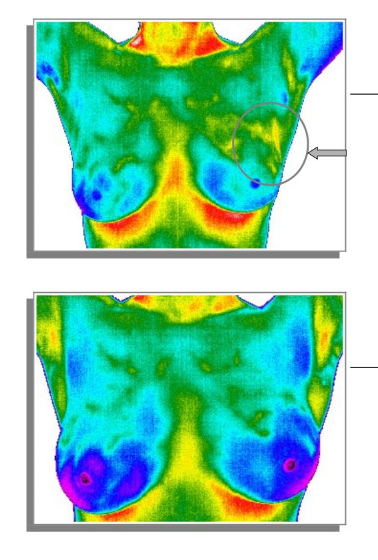
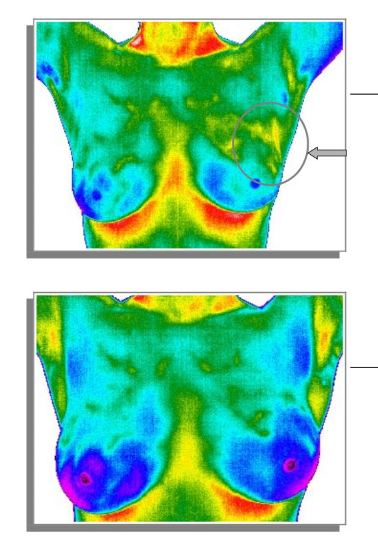
Here are the before and after images of thermograms of a woman's breasts (one of my clients), showing dramatic improvements in fibrocystic breast disease, a known precursor to breast cancer. Thermography is a totally safe, non-invasive means of breast health imaging that is suitable for women of all ages.
First Image taken May 2011
This is a thermogram image showing
inflammation in the left upper breast.
(Green, Yellow and spots of red)
This woman was in considerable pain most days with very tender lumpy breasts. Second Image taken Nov 2011
After applying iodine nightly to her breasts and having lymphatic drainage massage treatments her breasts felt 'wonderful' and the thermal images show far healthier heat patterns. The inflammation is gone.
If you, or a loved one, are interested in screening services in your region, or a consultation about what you can do to improve breast health, please feel free to contact me. It would be most helpful to have completed a thermogram. Refer to the brochure below:
The advice in these articles is given freely without promise or obligation. Its all about giving you and your family the tools and information to take control of your health and fitness.
Candida and Fungal Infections? Gary Moller recommends you explore this programme:
Click Here!