Gary's new website

Showing posts with label back pain. Show all posts

Sunday, January 05, 2014

Is spinal fusion a safe and effective treatment for disc prolapse?

State-funded fusion surgery near level in the US — where critics say procedure is over-used
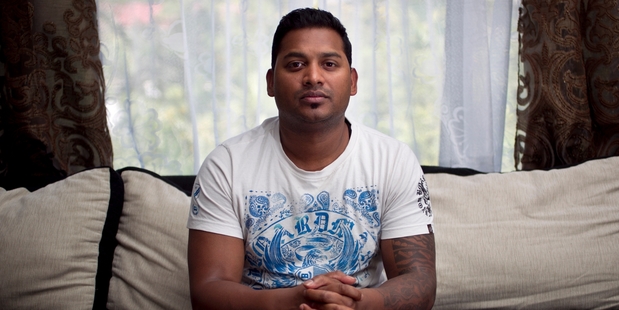

Shanil Vellaidan, who needs spinal-fusion surgery for a disc prolapse, is one of more than 1,000 people who may have the procedure this year. Photo / Natalie Slade
The number of patients who received state-funded spinal fusion surgery doubled in the decade to 2011.
This is approaching the rate of increase for the complex and risky - but often life-changing - procedure in the United States, where it has been suggested it is over-used in treating back pain and may be no better than physical therapy.
Leading New Zealand spinal surgeon Dr Peter Robertson acknowledges the controversy over spinal fusion for back pain in working-age people but says: "No one knows what the right incidence of fusion over a population is."
http://www.nzherald.co.nz/nz/news/article.cfm?c_id=1&objectid=11181064
_________________________________

Gary:
Spinal fusion is the treatment of last resort.  Its a path traveled for which there is no return: So opting for surgery for back pain must be carefully considered and exercised only after ALL conservative options have been thoroughly exercised.

The problems with spinal fusion

  •  Surgery does not deal with the underlying causes of low back pain.  Why did this person suffer disc prolapse and not the person next to him doing the exact same activity that was thought to cause the injury?
  • All surgery involves risk: Risk such as reacting badly to medication, a slip by the surgeon having a "bad hair day"; or contracting a nasty hospital infection (this is a huge problem that hospitals are trying desperately to keep quiet).
  • Spinal fusion may give relief for a number of years but not forever: Fusing one or more spinal joints ends up increasing the stress on the joints above and below the surgery.  With time, these joints may begin to fail.  Disaster!


When may spinal fusion be necessary

In my opinion, surgery may be justified where there is significant loss of function and sensation affecting the limbs, bowel, bladder and sexual organs - with failure to respond significantly to conservative therapies.

Many people have disc prolapse and other abnormalities of the spine while suffering little or no symptoms.  The existence of a disc abnormality in the absence of disabling symptoms does not justify surgery.

The most common cause of low back pain

Spasm of the gluteal (backside muscles).  These muscles are easily thrown into spasm from doing activities such as lunging, sitting or standing for long periods, lifting and bending.  These are the biggest and strongest muscles in the body.  They are your heavy lifting muscles.  If they become weakened and in spasm, then the stress of everyday activities is thrown on the muscles and joints above and below them - the knees below and the sacroiliac joints and low back above.  If this goes on for long enough then the intervertebral discs of the spine may begin to degenerate and disintegrate.  The problem is to do with the gluteals - the low back pain is the symptom - not the cause.  Got the idea? 

Treatment that works:  

Relieve symptoms of pain and dysfunction while treating the underlying causes


What are some of the underlying causes of disc prolapse?

  • One of the symptoms of exposure to toxic elements such as lead, cadmium and arsenic, is knee, hip and low back pain - disc prolapse specifically.  These toxins affect the cross-linking of collagen in structures such as the intervertebral discs.  I note, with interest, that the man in the Herald article is a mechanic: When I do hair tissue mineral analyses, mechanics are tops for exposure to nasties like lead.
  • Poor posture, poor lifting methods, weak muscles and imbalances.  This is epidemic in industry and life in general.  It takes months of instruction in a gym to replace sloppy technique and to develop a strong physique.  Most ACC funded rehab programmes are too short in duration for lasting benefits and instruction in weight training and lifting is not learned in a university lecture theatre.
  • Workshop and equipment.  Many mechanic workshops are unsafe: How many are back street operations are there out there without proper hoists etc?  How many workbenches are there that are sited adjacent to the solvent bath?  How may workshops are adequately ventilated?
  • Poor nutrition.  The modern diet is lacking many nutrients that are essential for strong, healthy bodies.  For example: Iodine, magnesium and zinc are all required for strong, healthy collagen, including that of the spinal discs - all are seriously lacking in the modern diet.  90% of us are seriously iodine deficient.  Lead and other toxic elements interfere with zinc and magnesium, as well as calcium.
  • Muscle spasm. Principally affecting the gluteals.  By the way, a back strain can set off a protective spasm of the gluteals.  This gluteal spasm may continue long after the original back strain has healed.  Spasm is self-sustaining.  Treatment involves nutrition, stretching, some exercise and weekly deep tissue massages lasting an hour each time.  In my opinion, physiotherapy, acupuncture and chiropractic only give temporary relief, if used as lone therapies.
  • Being idle.  One of the worst things anybody with pain can do is sit about.  The brain is a funny thing in the way it processes stimuli, including pain:  If there is a heap of chatter coming into the brain from sound, movement, touch, heat, cold and so on, when one is busily rushing about, the brain tries to filter out that which is not important so you can concentrate on the most important task of the moment.   Pain is filtered out.  If you are sitting idle at home with little in the way of stimuli; guess what?  Yes! - Pain is at its worst, because there is no filtering of the pain messages.  Keep busy.  Set tasks and deadlines.  If you can't work, then go do some exercise like dancing, visit a friend, listen to music, study, have a hot bath - but don't sit about watching television.

"I have tried everything, Gary, and nothing worked!"

I would be a rich man if I was given a dollar for each time I have heard this excuse! 

I do not like the word, "try": If I was delegating an important job with deadlines to an employee and the response is, "I'll try Gary".  I will immediately challenge that person: 

"When you say the word "try", does that mean you are going to fail me?  "Try" means failure before you even start:  You either do it properly, do it on time, or do not do it at all - You do not try - Take it out of your vocabularly".

When a client tells me they have tried everything I will respond with questions such as:

"Please list exactly what you have tried is that really everything?"
"when you say physiotherapy or chiropractic, what do you mean by these words: Describe what the therapist actually did to you?"
"How long and how frequent was the treatment?  Therapies take time: Months rather than days or weeks".
"Has treatment for muscle spasm and inflammation been taken to completion?"
"What sort of tests and measures of progress were there - strength, mobility, pain?"
"Horses for courses, I say: One physiotherapist may work wonders for one patient but not for another with exact same symptoms: Did you consult another physiotherapist if the first one did not work for you, or did you just give up?"
"have you been tested for things like lead poisoning?  If not, then you have not tried everything"  I have clients who have suffered lead poisoning from cast iron bath tubs, lead residue from firearms, hair dye, lead paint and even lipstick!
"have you been tested and treated for nutritional imbalances, such as iodine deficiency?  If you have, where is the evidence that you have actually corrected these?"

Conclusion

If the disc prolapse is not a medical emergency, as is the case for the majority, then one is best advised to thoroughly exhaust the conservative options before heading down the one-way surgical path.  If you are suffering from disc prolapse and are uncertain about what to do, you can contact me for independent advice and guidance.
http://www.garymoller.com/Consultation/Private-Consultation.aspx

Even if you can not come in to see me, much can be achieved by Skype video conferencing.  I have clients as far away as Alaska!

Further reading

My book about back pain (One of the very few ever published by a New Zealander):
http://www.garymoller.com/Products/Products/B/Back-Pain---guide-to-treatment-and-recovery.aspx


"Gary, When I read the Introduction Chapter of your book, I laughed so much I forgot all about my back pain!"
- William


http://blog.garymoller.com/2010/03/relationship-between-low-back-pain-and.html


http://blog.garymoller.com/2012/11/gluteal-butt-and-low-back-exercises.html


http://blog.garymoller.com/2008/05/low-back-pain-cycling-and-iliacus-and.html


http://blog.garymoller.com/2009/01/i-am-suffering-hip-and-buttock-pain.html


http://blog.garymoller.com/2013/06/it-feels-like-deep-pinch-in-my-hip-that.html


About this website 
The advice in these articles is given freely without promise or obligation. Its all about giving you and your family the tools and information to take control of your health and fitness.
Candida and Fungal Infections? Gary Moller recommends you explore this programme: Click Here!

Friday, October 25, 2013

My Back Problems - Guest Article by Gerald Crawford

My prolapsed disc began with a pain in my foot. 

But first let me tell you how it got to that stage. I am forty eight years old now and have been totally pain free from back pain for over six years now, but before that I have suffered with back problems from my mid twenties. It can be a bit tricky to pinpoint how and when a back problem begins, but in most cases it is something that develops over a period of time through repeatedly lifting or sitting incorrectly. 

In my case I think that mine was caused by lifting heavy amps and musical equipment when I was a band roadie in my late teens and early twenties and sitting at an office desk for many years. Back then my experience of back pain seemed to go in cycles of every one or two years, whereupon I would feel that ominous dull ache at the base of my spine for a few days before my back muscles would go into complete spasm and incapacitate me to the point where I was totally immobile, and I mean totally immobile. I could not even roll over in bed because of the pain, and only us back sufferers know that this has to be experienced to be believed. 

So for the next twenty something years I put up with this cycle of backpain, recovery, feeling fine and back pain again. I went to many chiropractors and physiotherapists, some told me that my core muscles were weak and that was why they went into spasm and others told me that my discs were compressed and were pushing against the nerves in my spine due to poor posture. 

Poor posture just means that your sitting position is wrong, this link can explain poor back posture better than I can. The truth is that nobody really knew the exact cause of my problem and I blame myself for not taking action to address what was obviously a recurring problem that wasn't getting any better, but unfortunately that's a common attitude that most of us take. 

Once we begin to feel better and recover from our discomfort we put off pursuing treatment to get to the root of the cause of our condition, and I have learned the hard way that this is a BIG mistake. So, fast forward to the summer of 2006, I had been free from back pain for maybe two or three years and had pretty much forgotten about my back problems because I was feeling good and fit. We were on holiday in Vancouver and doing more walking than I would typically do, when I gradually started to become aware of a dull ache on the top of my right foot. I ignored it and put it down to our excessive walking but as the days passed I could now feel this dull ache down the front of my right thigh as well. These pains were bearable but uncomfortable and I could not understand what was causing them, I certainly did not think that they were anything to do with my back because you feel backpain in your back, right? 

I used to carry my mobile phone in my right side pocket and I began to suspect that this was the cause, that maybe it was something to do with the microwave or infra red signals from the phone. So I gave my phone to my wife to carry in her bag, needless to say that after a few more days the pains were getting more intense and now I was having difficulty in walking at a fast pace as I could not put my right leg forward as far as I normally could. We returned home to Ireland from our holiday and things went from bad to worse, at this stage I couldn't straighten out my right leg and I was permanently stooped over. Any attempt at trying to straighten myself resulted in unbearable pain which ran from my right buttock, down the front of my thigh, down the back of my calf and through the top of my foot. Note that there was no pain in my back, even though I was pretty sure at this stage that this is where the problem stemmed from. 

I went to the hospital accident and emergency because I was in so much pain, they gave me pain killers and X Rayed me. Having my back X Rayed was pretty much a waste of time unless you suspect a broken bone. My problem was muscular and cartilage related and none of these tissues were going to show up on an X Ray, but the hospital insisted that I should have the X Ray as a precautionary measure. 

 In the United Kingdom we have the NHS (National Health Service) where every citizen is entitled to free healthcare, well it's not actually free because we pay for it through our National Insurance Taxes which the government takes in addition to our normal Income Tax. Anyway, it's still a good service because you don't have any unexpected medical bills to worry about, the downside is that there is usually a long waiting list for treatment. I needed to have an MRI (Magnetic Resonance Imaging) scan to find out what was wrong inside me and I was told that the waiting list for a scan was about two months, however If I was willing to pay I could have the scan within a few days. The fee for this was £500, not cheap, but I went ahead and paid to have the scan done to hurry things along. The scan revealed that I had: "Loss of lumbar lordosis and type 2 end plate change on L4/5 and concluded that there was a right posterolateral disc protrusion". I didn't know what that meant either, but in plain English it meant that two of the discs in my spine were compressed to the point that they were bulging out against a nerve root in my spinal cord. 

 Any operation involving your spine has its risks and is only considered as a last resort, and in my case I had left things too late for there to be any other option. The surgeon explained that the operation would involve cutting away the protruding sections of the discs that were causing the problem. He explained that the success rate was 75% and so could not guarantee that I would be free from my back pain after such an operation. If only I had addressed my back problems sooner it might not have got to this stage. 

So I was put on the waiting list for my operation which could be up to three months away, again I had the option of having the operation within a few days if I was willing to pay a fee of £4000. I couldn't afford to pay this amount and quite frankly I felt that I shouldn't have to pay as I had been paying into the system for over twenty years for my medical care. Being in such a condition can really get you down, I was stooped over like an old man and it was doing nothing for my self confidence, but I had finally found the root cause of my back problem which had been building up over the years and that made me feel a little better. I resigned myself to waiting for my operation, but I don't mean just sit and wait, it's important to keep as busy as you can to fight off the blues. 

I decided that this was an ideal opportunity to use my free time to start learning to play the guitar again. So instead of moping about in my stooped condition I accepted my situation and made use of my time by watching dvd guitar lessons in front of the TV to learn blues guitar. I also spent a lot of my free time on the internet which ultimately led me to learning how build websites, so at least something positive came out of all of this. 

After about a month of being on the waiting list I phoned the surgery to see if they had a date for my operation, I was told that no date had been set but I was 8th on the list. I phoned again a week later and was told that I was now 12th on the list, when I asked why I had dropped down the list they couldn't give me an answer. So from that day on I resolved to phone them every other day to enquire when I should expect to have my operation. I got to be on first name terms with the receptionist and the more we became familiar with each other the harder it was for her to keep putting my date off. I know it wasn't her fault that my operation kept being put back, but I figured that by contacting her on a regular basis she would do what she could to speed up my appointment date. 

You see I realised that there could only be two reasons why my operation was being delayed. The first reason was because people who were paying to have the operation were jumping ahead of me in the queue which was fair enough. I know this because the surgeon told me that it would be him personally carrying out my operation regardless of whether or not I paid, so there was nothing I could do about that. The second reason was because He Who Shouts Loudest Gets Heard. I was in a lot of pain and unless the doctors knew this they would be bound to give preference to the patients who they felt needed the care sooner than others. So by constantly phoning the surgery and making them aware of the degree of pain I was in, I had my operation fifteen days after I was told that I was 12th on the list. 

 I can remember waking up from my operation with my wife by my bedside. The surgeon, who was fantastic by the way, came to see me and after a chat he helped me to sit up on the side of the bed and try to stand up. I didn't know what to expect, and after weeks of being stooped over in pain, I was waiting for it to come rushing back as I stood up. I stood up straight and it was almost surreal that I couldn't feel any pain at all, I was absolutely ecstatic. I walked up and down the corridor, I couldn't believe how good it felt to walk tall again. It felt very strange to be standing upright again, everything looked so low to the floor, the bed, the tables, the chairs, even my wife looked so tiny because I had been stooped over for so long I just wasn't used to the view. 

If you suffer from recurring back pain I strongly urge you to take action before you get to my stage, if you are not getting answers or feel that your problem is not being addressed then speak up. Ask for an MRI scan to find out exactly whats going on inside your body. MRI scans are expensive and in my opinion they are only offered if the doctor feels that they are absolutely necessary, but if you feel strongly enough that you need one to get to the cause of your problem then demand it because if you don't push the issue nobody else will.


About this website 
The advice in these articles is given freely without promise or obligation. Its all about giving you and your family the tools and information to take control of your health and fitness.
Candida and Fungal Infections? Gary Moller recommends you explore this programme: Click Here!

Friday, March 08, 2013

Core strength: Restoring strength and good posture with exercise


About this website 
The advice in these articles is given freely without promise or obligation. Its all about giving you and your family the tools and information to take control of your health and fitness.

Thursday, May 28, 2009

What Supplements do you Recommend for Chronic Low Back and Neck Pain?

Hi Gary,
Could you please advise me on the supplements eg glucosamine etc I need. I am 54 & have chronic lower backache & do get neck ache/tension. 3 mths ago had a lifting injury & MRI showed C6 & 7 disc prolapse pinching on Lt fingers. Had acupuncture/massages, & did not require surgery. Would appreciate yr input.Thank you.
Regards
"F"
____________________________________
Gary responds:
Your story has familiar patterns with many of the cases that I see in person, so let's make use of that experience. Why does an apparently healthy woman suffer such serious damage doing what was previously innocuous activities? And why is recovery so slow and incomplete?

Soft Body Syndrome

The chronic pain and even the cervical disk damage can be associated with what I call "Soft Body Syndrome" (SBS). It is very common, especially in women as the years pass and is due to a diet that appears healthy but the reality is that she is lacking many nutrients. While youthfulness enables one to get by all it takes is a child or two or a period of forced weight loss, as examples, to throw her into a chronic nutrient crisis.

This may show in many ways including frustrating ailments of the digestive tract, chronic fatigue, depression, underactive thyroid, weight gain, tendonitis, muscle pain, osteoporosis and even disintegration of intervertebral disks.

Where has all the Sunshine gone?
A related close association with a softening body is chronic vitamin D deficiency which is a definite factor in bone, joint and muscle pain, including back pain. Go here for more about this. Vitamin D deficiency, courtesy of "single issue" Cancer Societies and blinkered Health Authorities, is now rampant within Western populations.

Iron Low?
Very often, there is a history of iron deficiency. Unless she has a blood test showing that iron levels are near the high side of healthy, low iron levels must be assumed. Low iron levels will be indicative that many other minerals within the body are equally deficient. This can best be measured with a Hair Tissue Mineral Analysis which can be ordered through me.

Not enough Vitamin C?
Weak tissue bruises easily, so a woman who shows bruising from bumping into furniture can be assumed to have SBS to some degree. Lack of vitamin C is another factor along with minerals and vitamin D.

If on a low fat diet, or a diet that is high in processed foods, including processed fats and oils then she will likely be lacking the fat soluble vitamins additional to vitamin D - Vitamins A, E & K. These all make for tissue fragility, including proliferation of spider veins and varicose veins.

Low fat food = The Kiss of Death

Where is the Coenzyme Q-10?
A low fat, carbohydrate based diet that is low in animal prodicts - typical of today - is a sure guarantee for a chronic deficiency in Coenzyme Q-10 which is central to mitochondrial activity which powers cellular metabolism. Mess with your mitochondria and you mess with your life! Early signs of deficiency includes muscle weakness, poor skin, wieght gain, blood pressure problems, tendon pain and so on - all very similar to other nutrient deficiencies such as seen with vitamin D deficiency. You can get quality Coenzyme Q-10 from my web store.

Too little protein
Another factor is protein deficiency. This is very common in women many of whom are on low meat or vegetarian diets. If there is any protein of significance, this tends to be concentrated in one meal meaning that the body may be drawing on reserves within lean tissue for the best part of 20 hours a day. The long term consequence is a gradual loss of tissue strength (SBS).

But I eat very good food every day!

Few women nowadays expend more than 2,000 calories per day. The sad fact of the matter is that even an apparently good diet that supplies 2,000 or less calories per day is sufficient to provide ample of all the nutrients that are necessary for a long and healthy life. While daily exercise workouts is the solution, this is fraught with injury and health risk if she is already deficient and weakened with SBS. It is more prudent to identify and correct any nutrient deficiencies first - then commence the additional exercise. This is all about getting the cart before the horse!
Get healthy - then workout!

You can gather from what I have written there several things you could do immediately. But I would prefer a more measured approach that is much more assured of succeess. Please gather the following information and send it all to me for analysis:
  • Get an up to date set of blood tests for general health, including lipids and iron
  • Get a blood test for vitamin D
  • Complete an Active Elements Assessment that you can access from this website
  • Obtain a Hair Tissue Mineral Analysis Kit from me and get the test done
  • Supply me with a 24 hour diet recall
  • List all health issues and their treatment to date
  • List all medicines and supplements being taken and their reasons
  • Describe your physique, lifestyle, occupation
Depending on requirements, a modest fee may be requested to cover my time.

Your email address:


Powered by FeedBlitz


Do you have a question?
Email Gary: gary at myotec.co.nz (Replace the "at" with @ and remove spaces). Please include any relevant background information to your question.

Tuesday, March 17, 2009

How does foot pronation cause low back pain?


Gary can you list the chain of muscles from the foot up to the low back, that are involved in low back pain caused from foot pronation?
Thanks! 
________________________________________________
Gary responds:
Roy 
Healthy feet pronate during foot impact.  I assume you are referring to weak or flat feet that pronate permanently or excessively during foot strike?
The link with back pain is not so much to do with any muscle chain but the loss of natural shock absorption by the arch of the foot.  The shock wave of foot impact is consequently not dampened as much as it would in a healthy foot.  What this means is a stronger than usual shock wave is consequently transmitted via the bones and the muscles further up the legs and even into the low back.  The same effect occurs when running with restrictive orthotics.  You can tell if an athlete is wearing these by the clumping sound and flat-footed running style.

The other factor is feet that are excessively pronated can cause tibial torsion.  The knees twist inwards as do the thighs.  The pelvis consequently tips forwards, increasing the lumbar lordosis.  If you go to my E-Book on Pronating feet, you will see a couple of photos that demonstrate the marked influence of foot posture on lumbar lordosis.

Did I pass or fail?


Your email address:


Powered by FeedBlitz

Do you have a question?
Email Gary: gary at myotec.co.nz (Replace the "at" with @ and remove spaces). Please include any relevant background information to your question.

Thursday, September 04, 2008

Feedback from a Happy Camper

"Overall I am overjoyed and can hardly believe how good my spine is feeling. I mean, there's still a million miles to go, in terms of rehabilitation, but I've come a long way, that's for sure, and I will get a whole lot further, I am determined!
And again, I have to say, thank you so much, Gary, I have no doubt at all that a lot of this is due to your help.

When I tramped slowly to the top of Kakamatua Ridge and did my dance of joy on the top, I sent you a psychic thank you!"
_________________________________
Gary comments:
Even when facing the prospect of surgery for a chronic injury, such as to the back, the benefits of holistic therapy can still be huge - in this case, massage, exercise and nutrition - all specific to the individual.

In some cases the need for surgery disappears. If surgery is finally opted for, then the patient will be in a better position to handle the procedure and recovery will proceed briskly with less risk of complication.

If you are under the care of a health professional, you are still advised to discuss any changes in your treatment plan before doing so.

Your email address:


Powered by FeedBlitz


Do you have a question?
Email Gary: gary at myotec.co.nz (Replace the "at" with @ and remove spaces). Please include any relevant background information to your question.

Wednesday, March 26, 2008

Is your Bra killing you?


One of the more common statements by women who seek my advice is along the lines of: “My back and shoulders are killing me!”

While there are usually several things going on that are contributing to this discomfort, the bra is often one of the main culprits. Usually that culprit bra is good “Old Faithful” – that dearly beloved frilly bra that has served her owner so faithfully for 20 years. Her owner has put on some girth and Old Faithful is now a faded and ragged remnant - and the under-wire is hanging out.
Why change? There is a kind of emotional attachment, like a well worn security blanket. A comfortable sense of security that is less than perfect; but acceptable. A bit like a reliable husband who has long lost interest in her undergarments – not perfect, a bit worn – but reliable.
Some bras I encounter are so tight I marvel at the engineering that must have gone into designing those tiny clips that prevent the device’s pressurised contents from bursting forth! The owner was obviously several dress sizes less at the time of its first fitting. Another problem is the chest and shoulder straps may be too narrow, garrotting the trunk and even the tops of the shoulders. With the underwire, one could imagine it being the perfect tool for an underworld assassin!
Take a look at these photographs: They show some of the damage being caused to three women by bras. What you can see is the subtle indentation of the bra where it acts as a kind of tourniquet about the thorax (I prefer to describe it as a kind of leaky “beaver dam” that interrupts the normal flow of a pristine mountain stream). Because the blood and lymph flow goes upwards in that region of the body, the flesh above the bra line, as far up as the neck and shoulders, may show signs of a chronic lack of oxygen and nutrients and the build up of metabolic toxins. The body’s response to these metabolic poisons is to dilute the area with water, causing a podgy appearance and even a thickened hump at the base of the neck (Sometimes called a “Dowager’s Hump”). The area under the breast, where the underwire bites into the flesh may be thickened and painful. This is unhealthy. Of course, there are varying degrees of pain and fatigue affecting the back neck, shoulders and even the arms. While it takes very little tightness of a bra to affect blood and lymph flow, it has surprised me at times just how tight a bra can be. How on Earth can a person breathe properly with such a restrictive band about the chest?

Feel great – burn your bra!

While I am not an expert on such matters, the solution is hardly rocket science: Get rid of that old bra and replace it with one that fits properly. I advise women to go to a specialist store that has a “bra expert” and get a proper fitting (I assume there are such places and people). I think the best design to investigate is the sports bra which has broad straps that support the breasts without biting into the flesh and an elastic chest strap which allows unrestricted inflation of the lungs.
Yes, there are specialists in bras with Wellington even having its very own official “Bra Lady”, Luella Plimmer, who can be contacted via here.
A broad strap sports bra may be much better when hiking with a back pack. Other than the better support it gives during exercise, the broader, flatter shoulder straps are less likely to bite painfully into the shoulder muscles when the weight of the backpack is on the shoulders. If there is biting, then even a light weight will cause neck and shoulder pain and poor circulation to the arms and hands.
If a woman is losing or gaining weight, the bra sizing should be progressively adjusted accordingly just as one does with tight jeans.
Take the bra off when relaxing about the house, even if it is entirely comfortable, because it takes only a little pressure on the body to interfere with the blood and lymph flow.
If you have been wearing a restrictive bra and have pain in your upper body and shoulders with a build-up of fluid under the skin, then several once a week massages by a trained masseur will help ease the muscle tension, shift the stagnant fluid and get normal flows going again.
For the latest article on this topic, go here

Talk to Gary Moller:
gazzamoller@BitWine

Monday, December 31, 2007

Back, hip and leg pain and muscle spasm associated with power lifting

I am 39, and i weigh about 105kg, at a height of 169 cm
I am overweight with about 15kg although the rest should be muscle as i did powerlifting at National and International level for 6 years, the rest of my life i was always in some kind of
sport, and like to be active and healthy.
But for the last year or so ( DO NOT DO POWERLIFTING ANYMORE) i am totally miserable, and feel like somebody that never did sport in his whole life. Maybe a would be better off not doing sport at all, as i see people with more energy and less pain that never were active in their life.
I have a spasm in my left latissimus, it seem to start in the left hip joint and then affects, the lats, then it goes down the side of my left leg and even into the calf muscle. In the morning the first 5 steps is like an old man, both feet are painful, and feel stuff even if the pain goes.
I feel like impinchment of a nerve in the area by my pelvic or lumbal vertebrae.

I am a bit off balance and i feel that i am much stronger right than left, and i do belief that the powerlifting caused a imbalance in my body, that need to be rectified.
The other day i stand on a foot pressure machine at a sport shoe shop, just to make sure and i was right i lean more over to my right, as the pressure was almost 10% more on my right leg than the left.

The spasm is permanently there, and i am about 90% of the day in pain or uncomfortable, i am so use to the pain, that i can bare it, but i want to get fixed, as i want to do some other nice things like running, or cycling with my wife and be active. This pain and aching, causes me to be a bit less energetic, and i feel sometimes warm almost like a fever i think it is the inflammation the spasms cause me.
Can you please help me, i have tried a number of things: Fisio, stretching (which is painfull), Acupuncture, a bit of Muscle or skeletal Manipulation.
George
Note: George has answered a number of followup questions that I asked of him to help narrow the range of possibilities.
___________________________________
Gary Moller comments:

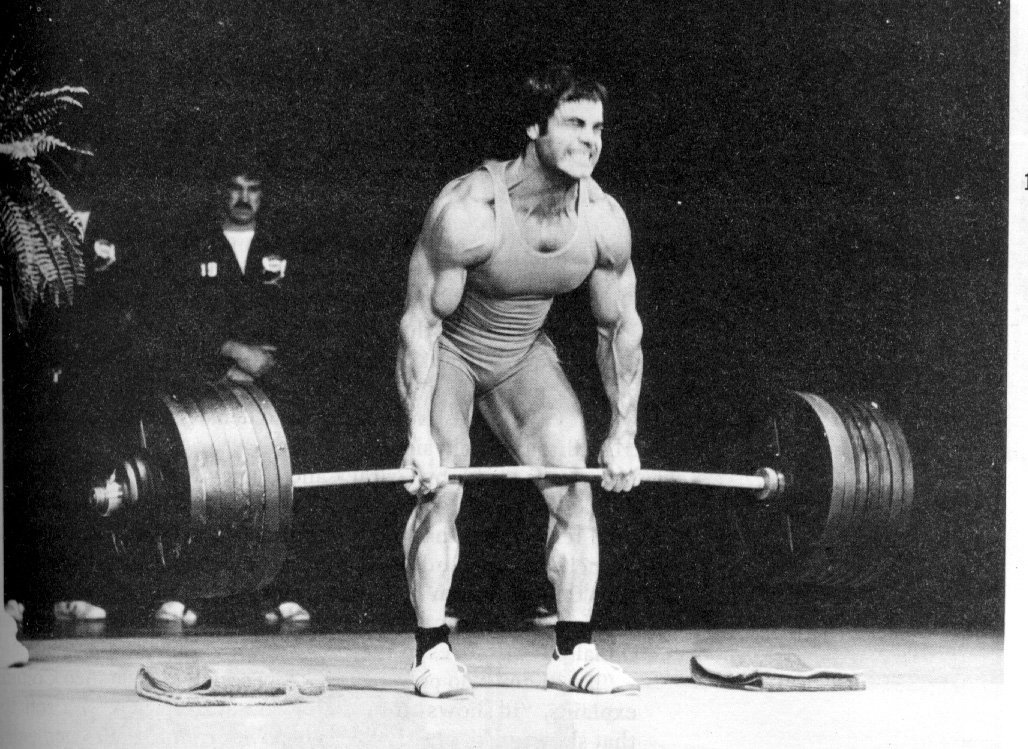
Power lifting would have to be one of the most stressful pastimes one could imagine as far as the back is concerned. It is a marvel of nature that the spine, delicate and fragile as it is, can bear such extreme loading as depicted in the photo to the above right. But does it? I do not think so because I have come across more than a few power lifters in my time who have wrecked their backs, knees and shoulders. We assume that all power lifters have biomechanically perfect technique, are in superb physical condition. The reality is that few lifters are perfect and few are in the kind of physical condition as the lifter in the photo. The nature of the sport is to push the limits and it takes only one lift to do serious damage. This serious damage may also be in the form of repeated micro trauma that does not disable until several years have passed, or as the resilience of youth begins to leave us.

One does not have to "pop" a disc to cause serious back pain. The Annular Ring is a source of back and sciatic pain. The annular ring is the ligamentous "band" that is the outermost layer of the disc. The intervertebral disc separates the bony spinal vertebrae, providing a shock absorber effect and enabling movement. The disc contains a dense fabric of nerve fibers and inflammatory proteins that can greatly increase pain and suffering. Annular tears are common and most of the time these go unnoticed. But if the tear is big enough or deep enough, severe back pain may be the consequence. The rings themselves may cause severe back pain or indirectly by allowing the disc contents to protrude into the spinal canal, impinging the spinal cord, causing back pain and sciatica. Unfortunately, there is little medical evidence that these disc injuries heal. Treatment is mostly about ongoing management and preventing further damage.

George, I suspect you may have caused repeated damage to your spine which is the source of your left-sided pain. The first course of action is to see about getting a referral to a medical specialist such as an orthopaedic surgeon to get the right tests and a proper diagnosis. Once you know exactly what you are dealing with, you can then be more certain about what to do over the short and long term. You will need to go see your regular doctor and discuss getting a referral. The alternative is to consult a local doctor with training in sports medicine.

Having said this, there are still a few things that you can do while waiting for the slow wheel of medical referral to turn to help manage things:
  • Get onto a general fitness and weight loss programme and peel off any excess weight
  • Do not lift any heavy weights - go for light conditioning and boost cardio fitness instead.
  • Get outdoors and get some sunlight. You need to offset all that time spent indoors. Expose the body and boost your vitamin D levels
  • Have a serious look at your diet and get rid of any junk that you can identify - confectionery, processed meats and grains, soft drinks, sports drinks, coffee and so on. Go all natural!
  • Trial a three month course of glucosamine and chondroitin with MSM
  • Take a quality B vitamin complex which may be beneficial for the nerves and may help reduce any nerve inflammation.
  • Do a course of supplementing with a quality magnesium supplement which may reduce muscle spasms and calm the nerves.
  • Add about 2,000 mg of vitamin C per day.
  • You might benefit from reading my book on back pain and following the exercise routines in it. These help to maintain a healthy and flexible spine.
  • Try a twice weekly course of massage to reduce muscle tension.
These measures should help give some relief while you are in the process of finding out what may be the problem.

Good luck George - all the best - and please keep us posted as to progress.

Thursday, July 19, 2007

Will glucosamine & chondroitin assist an athlete with a bulging disc?


Hi gary
I'm an athlete and have a bulging or herniated disc. Are there any supplements I can take to help heal the disc? I was thinking glucosamine and chondroitin with high strength fish and msm, if so in what amounts? Thank you for any help Paul
______________________________
Gary Moller comments:
I always wondered myself if joint food preparations containing glucosamine and chondroitin were of any benefit for a herniated lumbar disc. After all, the joints of the spine are exactly that: joints. The only difference between them and, say the knee joints, is they are semi mobile with a thick fibrous outer sheath and a gel-like internal that provides shock absorption and flexing, extending, gliding and twisting. The physiology is the same, including the reliance on movement for nourishment. There are other joints in the spine: small articular joints of the spinous processes which can become worn and inflamed.

Chondroitin may assist with manitaining hydration of the spinal discs which tend to dry out as we get older and with damage such as suffered by Paul.

Several years ago I was working with a retired shearer who had had two spinal operations over the years, including a spinal fusion of L-4/L-5. He was suffering repeated severe bouts of back pain that had him buckled and bent to one side in spasms. After about a year of these disabling episodes, I suggested he try a course of Nutra-Life Glucosamine and Chondroitin which he dissolved in a drink bottle and sipped throughout the day having a steady infusion of about 8 rounded teaspoons per day.

To his and our immense delight, his back pain eased almost completely within about three months and I can report that he has not looked back since, despite suffering other though unrelated health problems since. I often recommend glucosamine and chondroitin - plus MSM for back pain nowadays and the results are generally very positive. It is a harmless and relatively cheap therapy. Even if there is no obvious benefit for the spine, at least the person is ensuring other joints like knees and hips are kept in good nick. After all, back problems can cause extra strain to go on these other hard working joints and the last thing a person with back pain needs is a crook knee!

So, I have no hesitation in recommending glucosamine and chondroitin preparations such as Nutra-Life Joint Food for back pain. I would add some MSM, preferably separately such as Kordel's MSM. MSM has a natural anti inflammatory effect and builds healthy collagen such as found in skin, hair, nails, ligaments and joint cartilage. An athlete can take extra a few days before, during and after anticipated extreme exercise and competition to aid recovery and healing.

How much should one take for a bulging disc? I recommend taking between 1500 and 3,000mg of glucosamine per day, spread through the day for about three months before backing off to a sustenance dose of about 1,000-1,500 per day. Doses of chondroitin are generally a few hundred mg less per day. MSM can be taken at about 2,000mg per day and then drop back to about 1,000mg after three months.

Once the three months are up, the idea is to fall into sustenance mode and step up the amounts around anticipated periods of stress or when pain is felt. After several months, relax and take some here and some there. I personally go in fits and starts with all supplements just for the sake of it.

Finally, exercise is essential for management of a bulging disc beginning with ensuring that the hips are strong and flexible. My book on Back Pain is a good start for exercises. If your hips are tight, then the stress of athletic exertion is transferred excessively onto the lumbar spine, so ensure you work on the hips. All the core exercise under the sun will be of no avail if the hips are tight and weak.


Sunday, July 15, 2007

Kick Back Pain in the Butt

Purchase direct from the author and Save!
___________________________

"Gary, When I read the Introduction Chapter of your book, I laughed so much I forgot all about my back pain!"
- William
___________________________

At some time in our lives, just about all of us will suffer back pain. Many will be plagued by ongoing and often unpredictable bouts of pain and disability. Low back pain, back injury, sciatica and nerve pain, muscle strain, back surgery, lumbar disk protrusion, sacroiliac pain - if any of these apply to you, or if you just want to keep your back strong and healthy, this is the book for you. While researching for this book, I was struck with the rather bland and sometimes depressing writing style of the books out there for people who are hurting. My decision was to write this in a chatty and sometimes humorous style, just to cheer up my readers and to also let them know that this is one so-called "expert" who knows all too well what a terrible affliction back pain can be.

 
I also identified a huge abys in most current advice: how who and where to get help and what to do as first aid when you first injure your back? The book includes 10 Tips for a Healthy Back. Back Pain guides the reader through the process of what to do from the moment a back injury happens, how to apply first aid, when to get medical help, and how to assess what works. It advises about ongoing care and maintenance, including advice on exercise and diet. Back Pain includes a helpful chapter "Ten tips for a better back" and has graded exercises that progress from a bed-ridden state to resuming full function.
___________________________

"This is the most refreshing and practical book I have read about back pain. Thank you." Mary
___________________________

Even if you don't currently suffer back pain, prepare now while you are able! Besides, the odds are that someone close to you is suffering back pain right now. Consider purchasing this book as a gift to them.
___________________________

“I just wanted to say that your Back Care book is great! I gave it to my mother who has some back problems and I was unsure if she would pay attention as she is not one for taking advice really. However, she obviously liked how you talked in the chapters and related to it as did I! So thank you very much for producing something that inspires all sorts of people into caring for a vital but often overlooked thing such as our 'backs'.
- Steph”
___________________________

 
At just $19 you simply can't go wrong with this offer. That's the equivalent to spending on just one bottle of pain killers. You'll pay twice that when you go to the doctor and that again each time you go to a Physiotherapist or chiropractor. You can't lose, so what are you waiting for? Take control of your back pain now and kick it! Getting your copy of the Back Pain guide is quick and painless, so act now.
___________________________
Purchase here:

Tuesday, June 26, 2007

Back pain, surgery, glucosamine and triathlons

Hello Gary, I have just come across your website and I must say its bloody fantastic.
I am an age group triathlete (41year female) who last year had diskectomy surgery on my lower back and am now suffering from painful degeneration that has caused me to cut my running right down (replacing with crazy fast walking) and I am finding the swimming painful too. I have just started taking Glucosamine tablets and am trying hard to not take as many panadol as I am sure it cant be good for me.

My goal is to NOT go and have fusion surgery but to still be able to race and train comfortably for as long as I can.

I was interested in your u tube piece on the various joint supplements but am now a bit confused as to what I should be taking can you help. I have also been reading many online articles about it and some say its not been proven to work and some say its fantastic, what is your opinion?

I really look forward to hearing from you. "L"
________________________

Gary Moller responds:

"L"
Glucosamine works more often than not when taken in ample quantities, consistently and for several months. It can be beneficial for back pain because the spine is a complex series of semi-mobile joints, so the same principles of joint nutrition apply.

Read my book on back pain carefully. More or less, leave the spine alone and concentrate on mobilising the hips which may be very tight as a result of all the repetitive running, cycling and swimming you have been doing over the years. Doing so may relieve stress on the low back, especially when you walk and run.

Get a trained massage therapist to massage your low back and backside muscles, locating and focussing on painful "trigger points". You will require from 6-8 sessions every 4 or so days for relief.
Try a warm Epsom Salts compress on the low back and soak in a hot bath with a cup or two of Epsom Salts. The magensium and sulphur soak through the skin into the body and aid relaxation of muscles and nerves and with tissue healing.
All of the products mentioned in this article are available from http://www.myotec.co.nz/

Given your age and sporting background it is possible that you have burned your body of B vitamins and minerals, principally magnesium. If you are like 100% of everyone I have so far had tested you will be low in vitamin D. Deficiency in any, or a combination of these, will be significant factors in ongoing joint and muscle pain and failure to get better, such as you are suffering. If such deficiencies exist, then no amount of exercise, physio, manipulation, drugs, surgery or rest are going to provide lasting benefit. You must get the chemistry within the body right first for there to be a restoration of vitality and healing to the max.

Further surgery is your final option. Surgery of the type that results in loss of mobility of any joint, including in your lumbar spine, may cause additional stress on the joints located immediately above and below and they may eventually fail.
"L": Give the conservative measures of Mother Nature and Father Time a chance to work their magic. Relax! Put your feet up; your body is telling you that it needs a rest. Be lazy for a few months. Go on a South Seas winter holiday in Rarotonga and lie on the beach and eat good food for as long as you can. Find ways to pamper yourself (triathlons are punishment and you need counterbalances). Body and mind will tell you when you are ready to recommence training. Being in a fresh state, you may find that you have lost little and are very soon doing personal bests.
It is often the case in sport that more is less. Less can mean less punishment on the body and better quality of training and comnpetition. This can equate to injury resistance and higher end performances.

If you are in Wellington I am available for consultation.

Thursday, December 14, 2006

Herniated Disk Improves With Either Surgical or Nonsurgical Treatment

"Patients with herniated disks had improved outcomes during 2 years whether treated surgically or nonsurgically, according to the results of a randomized trial with an accompanying observational cohort reported in the November 22/29 issue of JAMA.

"these findings suggest that in most cases there is no clear reason to advocate strongly for surgery apart from patient preference. For the patient with emotional, family, and economic resources to handle mild or moderate sciatica, surgery may have little to offer."
_______________________________________

Gary Moller comments:
The terrible suffering and restriction on that severe back pain causes can probably never fully appreciated by others more fortunate.
With modern imaging techniques, detailed pictures can be obtained showing herniated discs and other mechanical abnormalities. Modern keyhole microsurgery makes the surgical solution increasingly attractive. But is it really that more effective than a decent physical therapy programme and the progress made by Mother Nature herself over time? This study, and many others over many years, show little extra benefit in most cases of going down the surgical track.

In most cases surgery must still be supported by months of progressive exercise to regain as close to full strength and mobility. This is more or less the same path as the non-surgical treatment approach anyway. Over the long term, there is little to separate the two paths in terms of final destination. I know that from experience of working in back rehabiliation for about 15 years.

If you are suffering back pain; unless you are losing sensation and function, then my advice is to take your time with deciding whether or not to take the surgical path to recovery.

Get the imaging done by MRI or ultrasound (DO NOT allow your internal organs to be irradiated by a cancer producing CT Scan). Discuss the results and the need for surgery with your specialist. Before making a final decision, if surgeryt is recommended, take the results of the imaging away with you and consult a range of back experts who have been in practice for at least 10 years - a physiotherapist, chiropractor, osteopath, various doctors and don't forget the Chinese therapist with the incomprehensible qualifications. If you undergo any treatment with any of them, do not allow any procedure to continue if you feel uncomfortable - tell the therapist to stop and discuss your concerns. Sometimes a regime as simple as a proper exercise programme, massage, stretching and a few key nutritional supplements can give gradual and lasting relief.

All surgery involves an element of risk. The outcome is never assured. The big worry nowadays is hospital based infections. Ask your Dr what the post-operation infection rate is in the hospital you are being referred to. If he/she does not know, you should insist on finding out. Hospitals prefer to keep this kind of information quiet for obvious reasons. Your Dr should know and so should you.


If you have back pain or a friend or relative who is suffering, a good present for the Xmas stocking is my book on Back Pain. You are always welcome to write in with your questions and concerns.

Tuesday, December 05, 2006

Don't sit up straight - its bad for your back

"It seems that sitting up straight, something many of us are taught from a very early age, is not good for your back, say researchers from Scotland and Canada. They found that sitting up straight strains your back unnecessarily. Ideally, you should lean slightly back, at an angle of about 135 degrees, they say".
_________________________
Gary Moller Comments:
The spine is made up of a complex series of muscles, ligaments, bones and fibrous joints. The joints have a poor blood supply. The joints rely on movement to squeeze nutrient-rich fluid into the tissues while removing the metabolic toxins. Lack of movement causes pain and stiffness by a buildup of toxins that swell the intervertebral disc. Without movement, the joints gradually degrade, stiffen and weaken over time and may open the way to chronic and sometimes catastrophic back problems. This is why any form of exercise tends to give some relief for back pain sufferers.

Sitting is worst because the protective abdominals relax within seconds of sitting. Standing is a little better; walking is good as is jogging - so long as these are coupled with various toning and mobility exercises.

Like other joints, I have found that including Joint Food in the diet can give lasting relief to back pain. The nutritional needs of the spinal joints are probably more important than joints like the knees because of their poor circulation.

I have published a book on back pain which has practical advice for prevention, treatment and recovery; including a series of exercises.