Gary's new website

Showing posts with label barefoot running. Show all posts

Tuesday, April 08, 2014

I have Morton's Foot and suffering a lot of ankle issues

"Hi,
 Interested in your thoughts on Morton's foot? This is something I can visually see by the metatarsal
A good example of Morton's Foot
length. I wore orthotics for 15 years and decided 1.5 years ago to get out and transition down to a more minimal shoe. While I've done this I'm suffering from a lot of ankle issues. Really the longus and brevis seem to be problematic. I'm not a runner but even trying to walk a mile a day seems to over stress them."
(name supplied)
________________________
Gary:

If the space between your first and second toe appears to be deeper, not wider, but deeper than the space between your second and third toes, you have Morton's Toe, also known as Morton's Foot.

A lifetime walking on volcanic scoria - Samoa
Morton's Foot is associated with foot and ankle pain, most commonly pain in the ball of the foot.  I
do not think metatarsal discrepancies are really that much of an issue in themselves; the real issue is to do with foot strength and foot hardness. When I look at the feet of some of my Samoan in-laws, I see strong feet that are perfectly adapted to their environment.  They are not necessarily the most beautiful of feet; but they sure can take a whole lot of punishment.

The problems I see daily with foot pain are closely associated with soft, weak feet which are the product of a lifetime in shoes from birth.  This sheltered upbringing of one's feet is not usually a problem until the owner starts to put on a bit too much weight, takes up a fitness programme, or - heaven forbid - starts preparing to run a marathon wearing minimal shoes!  Matters may also be complicated by nutritional deficiencies and unwanted side effects of medication.

Here is what I recommend in general for foot pain:

  • Get about the house and office barefoot - wear socks.  I do so all day while at work.
  • Walk barefoot often on natural surfaces such as grass, river gravel and sand.
  • Do daily exercises to strengthen the arches of the feet:  Google search: "Gary Moller Correcting Foot Pronation".
  • Keep your weight on the lean side: every excess Kg is a huge stress on the feet, especially when standing, walking and running.
  • Bathe tired legs and feet in a tepid Epsom Salts foot bath.  Google search: "Gary Moller Sore Feet".
  • If planning to exercise in "Barefoot" shoes, make the transition from conventional footwear very gradual.  If you have a history of "weak feet" it may be better to use conventional sports shoes for the heavier exercise, including longer running and walking and use the barefoot shoes around the house and yard.
  • Many medications may accelerate arthritis with long term use.  These include asthma drugs, many blood pressure drugs, drugs for thyroid disease, drugs for osteoporosis, all steroids and most anti-depressants.  If you are taking any medication and you are beginning to suffer unusual joint and/or muscle pain and stiffness, then the role of medication must be suspected and explored.


About this website 
The advice in these articles is given freely without promise or obligation. Its all about giving you and your family the tools and information to take control of your health and fitness.
Candida and Fungal Infections? Gary Moller recommends you explore this programme: Click Here!

Thursday, July 11, 2013

Running nostalgia - Style and Drills

Here's the link to a great website if you are into running history:
www.racingpast.ca
(Thanks to Trevor Vincent for finding this website)
And, if you are into running style and seeking prefection of the running physique, look no further!

Running drills to develop the running musculature and style were part and parcel of every training session.  Then, in the 1950's, running underwent a revolution when New Zealand runner, turned coach, developed his system of athletic conditioning.  This article about Peter Snell explains it: http://www.racingpast.ca/john_contents.php?id=113

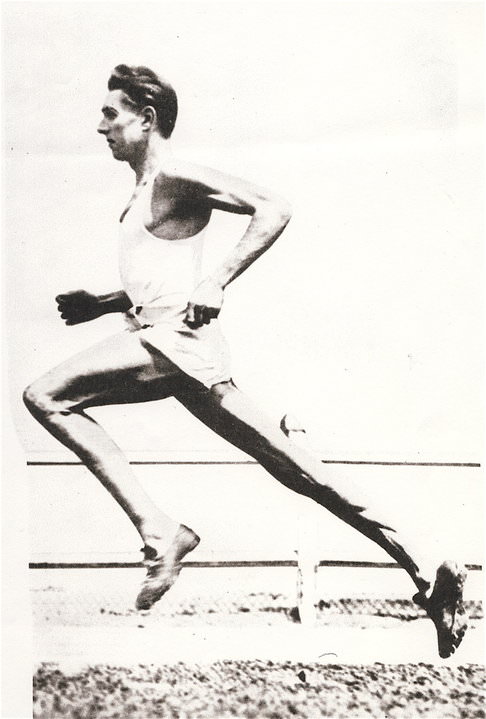
Jules Ladoumègue Profile
1906-1973
1.71 (5’7”) 59kg (130 lbs)

The famous photo of Ladoumègue
 showing his fine running form.


Running drills were always an integral part of Lydiard's training programmes and it is sad that most middle and long distance runners - in New Zealand anyway - have long forgotten the value of these: Very much to the detriment of injury prevention and performance.

Strong physiques, good drive off the toes, high knee lift: Impressive!


About this website 
The advice in these articles is given freely without promise or obligation. Its all about giving you and your family the tools and information to take control of your health and fitness.
Candida and Fungal Infections? Gary Moller recommends you explore this programme: Click Here!

Monday, April 16, 2012

Run for your Life Workshop for injury-free running


I was riding up a very steep Brooklyn Hill today taking my son, Alama (12), on his 2nd ever outing on a real mountain bike complete with cleats when I heard a load slapping sound coming from somebody running down the hill.  He was running in a pair of barefoot runners, landing heels first with a bone-crunching slap and thud!  It was a sickening sight and sound: All I could see were multiple injuries in the making.

While I have no problems at all with barefoot runners (I am the proud owner of a pair), I do worry that far too many people are getting on the barefoot bandwagon with hardly any idea of how to run efficiently.  Rupert Watson to the rescue (If you live in Wellington).  Please read the flyer below:


Run for your Life

For runners of any age who want to go the whole distance.

Running may be natural, but it is intense, with some 60% of runners injured in some way each year.

Tuesday, March 20, 2012

How to start Running and Walking barefoot and stay injury-free


Photo: Yes, yes, I know it - you think I’m
crazy being barefoot in a hail storm! 
 
Last year, I read a book about the legendary Tarahumara Indians who run up to 30 miles a day barefoot. This book, “Born to Run” has sparked a craze for barefoot running and walking. 

Is barefoot the way to go? Should you discard your walking and running shoes in favour of minimalistic footwear such as worn by the Tarahumara Indians? While I think going barefoot as much as possible is great for foot health, I am not about to tell every body to do so. The main problem is that most people nowadays do not have feet tough enough to handle being barefoot, nor do they have the running and walking technique for safe and efficient barefooting. (Modern shoes soften the feet and encourage stomping heel-first).

Photo: Lorraine and Gary Moller circa 1958 -
Raised bare foot from birth. 
 
My favourite pair of shoes is Vibram Five Fingers. These minimalistic shoes are the closest to being barefoot as you can get. I wear them everywhere, including during adventure holidays and when doing light-weight hiking. These shoes are extremely light and agile and easliy carried as back-ups to heavier-duty footwear. Still, I am very careful where I run barefoot and how far I go when wearing them.

Barefoot running is not for everyone
If you weigh more than about 80Kg I suggest you think twice before taking up running for the first time or after a long break. You would be better off doing a low-impact activity such as swimming paddling,cycling or walking. The injury risk of running is inherently high and it increases as weight increases. 

Running and walking in bare foot shoes is different to running or walking in conventional shoes and you need lots of time to safely transition. The most important rule in shifting to barefoot running is to take your time, doing a little bit of barefoot running at a time while sticking mostly to barefoot walking.

Note: While I am talking about walking and running in the same breath in this article, this message of caution applies mostly to running which has a much higher risk of injury. If you stick to walking then barefoot simulation should be perfect for most - so long as you take your time getting used to it!

Just about every athlete in this photo, other than me, would win 
a national champion ship if they were competing today - 
such was the depth of talent!

Other than the odd pair of Skellerups, we all ran barefoot 
in the "Good Old Days". Sadly, feet are not quite like they 
used to be, so take care if you decide to become a barefoot runner. 
Take your time making the transition to running or walking bare foot
Most people are raised from birth wearing some kind of protective footwear. Few people walk further than what it takes to get to the car or the fridge. Further than that and it is done on a treadmill or cross-trainer. If walking the outdoors it is on a manicured trail in heavy footwear. So, feet nowadays are very different to those of our ancestors, or present day Tarahumara Indians who were raised wearing little more than a pair of beat-up jandals - if that.

Unless you are a Tarahumara then your soft feet are going to require months, if not years, to strengthen to withstand the stresses and strains of running - with, or without shoes! In my job I am kept busy with stress fractures and strained foot tendons - and these are hardened runners - not newbies!

Start Slow - Keep the Miles Low

Get about the house and environs barefoot
Begin to toughen your feet, including the soles and skin, by taking every opportunity to be bare foot. As your soles harden, walk on grass and sand until the skin feels tender. The sinews of the feet will respond by getting stronger and the soles thicker and harder. Once that is comfortable, shift to walking on hard pavement, asphalt and even gravel - bare foot of course! this process may take several weeks of daily application.

Do two minutes of barefoot running or walking at the end of each of your runs/walks
Run or walk in your trainers but carry your bare foot shoes with you, or have them waiting at the end. Swap shoes and do a few minutes warm-down in your bare foots, including stretching. As the weeks pass, very gradually increase the distance you do in your bare foots.

Run only every 2nd or 3rd day
My three older children, Myra, Mary-Ann and
Kelvin, posing with Rod Dixon after competing
in a track race - Barefoot of course! 
Whether in cushioned trainers or bare foot shoes, sensible runners always schedule every 2nd day as a relative rest. This injury-prevention rule is most important when transitioning to bare foot running - and continued once the transition is complete. If you stick to walking, you can train daily because of the lower injury risk.

Run and walk mostly off-road
The best way to avoid injury is to make 80% of all your running and walking off-road, bare foot or not. The feet are best served by favouring surfaces that require continuous adjustment of the muscles, ligaments and joints of the feet. Monotonous ambulating on hard, flat pavement is a sure guarantee for eventually suffering an over-use injury. Your feet love the constant variation that is inherent of natural terrain.

Get a massage of the calf muscles and feet once a week
Massage kept the Roman Legions on their feet when marching a thousand miles and more in full battle-kit from Rome to the outer reaches of the Roman Empire, to do battle and then return victorious. They managed this in little more than leather sandals. If massage was good enough for them then it is good enough for you.

Get a thorough massage of the legs, including the feet, once week. It is the best investment you'll ever make to ensure your running and walking remain enjoyable and injury-free.

You might find this article an interesting read: http://blog.garymoller.com/2008/03/so-now-experts-tell-us-that-going-about.html
_______________________________________
About this website
The advice in these articles is given freely without promise or obligation.  Its all about giving you and your family the tools and information to take control of your health and fitness.

Thursday, October 14, 2010

I am hoping to become an injury-free triathlete


"I'm writing you because I saw your video on how to strengthen the tibialis posterior. I have shin splints and I have suffered from ITB syndrome. I am a biker and a swimmer, and I am hoping to become an injury-free triathlete, but my shin splints are stopping me from running at this point in time. If I am currently suffering from shin splints and a moderate case tibialis posterior tendonitis will it helpful to perform this exercise. I don't want to exacerbate my condition as I am taking time off from running to try to recover.

Also, on a semi-related topic, do you think it could be preventitive to run barefoot? Not on the cement of course. I feel like running in shoes, almost always with arch supports, have weakened tibialis posterior and anterior."
Matt
________________________________________
Gary:
(This video has now had over 165,000 views - wow!)

This exercise, done as described in the video, about every 3rd day will assist with maintaining strong feet and ankles.  It targets exactly the muscles and tendons that you are writing about.

Barefoot running, simulated wearing footwear such as Nike Free or Five Finger running shoes will assist with keeping injury free.  If you have been raised in shoes take care introducing barefoot running.  Start with short jogs and with 2-3 days between simulated barefoot sessions, otherwise you may actually make matters much worse!

If you have shin splints and ankle pain then you need to do a course of deep tissue massage of the feet and lower legs.  Repeat one deep tissue session per week for as long as it takes for these to be painless massages.  Significant progress will be seen by the 3rd session if the therapist is doing a good job.

You will find many other articles and training guides on this website about this injury issue and training for events like triathlon and marathon.  enjoy the reading Matt!

_______________________________________
About this website
The advice in these articles is given freely without promise or obligation.  Its all about giving you and your family the tools and information to take control of your health and fitness.  Please give me your support by subscribing to my free email updates. Please shop at my Online Store. Please encourage your family and friends to do the same. While we may not always be able to compete with the big operators on price, we aim to more than compensate through personal service!


Your email address:

Powered by FeedBlitz
Do you have a question?  Email Gary: gary@myotec.co.nz. Include any relevant background information to your question.  Please be patient and be aware that I may not be able to answer every inquiry in detail, depending on workloads (My paying clients take precedence!). I will either reply by email or, most likely, by way of an article (Personal identifying details will be removed before publication).

Tuesday, October 13, 2009

Running Shoe construction - Have we sould out to the shoe companies?


"Recalling that your sister was a barefoot runner early in her career, I wonder about your thoughts on minimal running shoes. I can see valid points on both sides of the argument."


Photo: Lorraine and our late father, Gordon Moller, circa 1976, training in the Central North Island forests (Pinedale).

Note the rough terrain. The light shoes are conducive to nimble footwork. This terrain meant every foot strike gave varied stress on the feet and ankles and was quite soft on the knees and hips.

Heavy, over-constructed shoes would only lead to clumsy footwork and consequent injury - mostly from falls and ankle sprains.


"I had hip surgery July 2008 for labral tear induced by a well meaning therapist, on a totally fine hip, to impress me with her work and refer patients! Ouch. I have to vary my activity widely. The greatest bulk of my exercise time is in the twice weekly 2.5 hour strength training sessions. With one more shorter strength session, a couple hour hike in the mountains one day and a long stationary bike ride other days.

One day a week I allow myself the luxury of running for an hour. I don't want to lose that last bit of my running soul and have to be very careful given the hip surgery and the 3 preceding knee surgeries.

Occasionally I set aside my Asics Gel Nimbus in favor of my old Nike Free 5. Today I felt lousy before my run but once again I was surprised when I ran my usual course in just over 56 minutes - a minute faster than my last couple of year PR and 2-3 minutes faster than usual.

Have we sold out to the shoe companies? Have they stolen our running souls? (all inherent puns and double entendres intended)"
Michael
_____________________________________
Gary responds:
(Readers might gather that Michael is a doctor who loves to run).

"The human foot is the result of millions of years of evolution. The shoe companies want to change the design of the foot straightaway. Running in the cumbersome boots that jam the display shelves of the typical running shoe store is akin to John McEnroe trying to play tennis with a baseball bat"
Gordon Pirie

I weighed a pair of Lorraine's Mizuno Run Bird shoes which helped her win the Osaka Marathon circa 1987 and a pair of heavier modern running shoes. The Run Birds are of absolute minimal construction and weighed in at just over 100 grams per shoe. That is really light for running a marathon on hard pavement! A pair of my modern Asics off road shoes were almost three times that weight.

If you are running for an hour, you are probably raising and lowering a shoe about 30cm or more for each meter run. That's about 10,000 times. Which means you are raising the shoe 3,000 meters in height. According to my calculations: The total weight being lifted and lowered one meter in height is about 300Kg worth for the 100 gram shoe or about 900 Kg for the heavier shoes. These calculations do not include the energy cost of accelerating and decelerating the shoes. (PS: I rushed these calculations, so my apologies if there are any errors).

Now, try this:
  • Get a 10 Kg weight, a bench one meter in height and set yourself up with a heart rate monitor. Then:
  • Measure resting heart rate standing still. Then:
  • Lift the 10 kg weight from the ground onto the bench and then lower. Repeat this non-stop for 30 repetitions.
  • How much did your heart rate go up and how long did it take to do the 30 repetitions?
  • Work out how far you could run in that time at that heart rate.
  • Rest for 5 minutes and then repeat the exercise, this time doing 90 repetitions.
  • Now extrapolate these results to running a marathon.
Phew! Give me the light shoes any day!

Heavy shoes, or any extra weight, including a water bottle, back pack, watch or heavy clothing all energy-sappers.

So, the message here is to run light and that definitely includes your shoes.

My favourite running shoes are a pair of super light Addidas racing flats. I have removed the inner soles and replaced these with a pair of heat moulded Formthotics Shock Stop inner soles.

But what about injury risk? Very little of my running is on hard and boring pavement nowadays - I run over tracks that are generally rough and often very steep (That's Wellington for you!). I seldom run longer than an hour and do my longer exercise sessions on a mountain bike.

This works well allowing me to compete in a number of sports injury free at 56 years of age.

I hope this kind of answers your question - I am sure you can gather where I stand on this matter. Minimalist.

Your email address:


Powered by FeedBlitz

Do you have a question?
Email Gary: gary at myotec.co.nz (Replace the "at" with @ and remove spaces). Please include any relevant background information to your question.