Gary's new website

Showing posts with label running drills. Show all posts

Friday, June 12, 2015

Bounding drills and training the Lydiard way

Gordon Moller practicing a bounding drill during the latest Lydiard Coaching Certification course
Gordon turns 60 later this year and his performances are world class when it comes to age groups.  He finished 3rd overall in his last off road half marathon and won his age group by a country mile.  He's fast.

When most people think about training for a marathon, or half marathon, thoughts usually turn to grinding out endless miles, day after day and week after week, with little attention to other components for performance, including form and efficiency.  While time out running is an essential part, so is paying attention to developing power, speed and form and these can all suffer if training is mostly an endless plod.  Whether you are a front runner or recreational runner your body does not differentiate - the same principles of training apply - all that may vary are the intensity, volume and duration.

Arthur Lydiard was the founder of modern periodisation and his methods are still unsurpassed.  The key to enjoyable and rewarding running, be it an 800 meter race, or surviving an ultra marathon, is getting the right mix of endurance, speed and power in training and timing when and how these are introduced to produce consistent and satisfying performances on the day.  This is the art and science of periodisation.

If you are a coach or athlete and want to learn more about Lydiard Coaching Certification and the art of periodisation, please go here:
http://www.lydiardfoundation.org/events/

Train well!


 About this website 
The advice in these articles is given freely without promise or obligation. Its all about giving you and your family the tools and information to take control of your health and fitness.

Monday, December 23, 2013

Do calf raises prevent calf injuries in running?

Do calf raises really
If your form is not like this: Work on it!
prevent calf injuries in running? The answer, in a word is "No!".

The key to preventing calf and Achilles tendon injuries in running is "good form" by which you, as a runner, have a running style that has you running from the hips - not being a "thigh and calf" runner.

Look at the best runners in the world - runners like the Kenyans - and you will see a physique where most of the muscle is concentrated about the hips.  The legs, themselves, although incredibly toned, tend to be long and thin in appearance and they rotate about the hips in a "combine harvester" like action.  The power is being derived from the powerful muscles about the hips - not the calves.  That's for sure!  A thigh and calf runner, by contrast, will have weak and wasted looking backside muscles, swollen calves that are painful if squeezed and running is more of a fast shuffle than a rolling harvester that literally eats up the ground.

With good form, the athlete appears to glide weightlessly along; whereas the clumping thigh and calf runner looks like having a life and death battle with gravity - the ground is about to swallow them up!

If you are constantly straining calf muscles while running, consider the possibility that the cause may actually be from over-working the calves due to poor running form.  Maybe, instead of pumping more weight in the gym, doing concentric and eccentric exercises, you need to spend more time on developing a more efficient running form?

Read this and watch the video:
http://blog.garymoller.com/2013/11/essential-running-drills-for-perfect.html

When you come to think of it: If you think you have weak calf muscles, what could be the more perfect calf strengthening exercise for a runner than running up a hill?  When you come to think of it:
"If you are running up hills regularly, surely you will already have developed strong calf muscles?"

(Thanks, Wayne, for sending me the link to the article that follows)

Do calf raises prevent calf injuries in running?


Old man calf injuries are a scourge amongst middle-aged runners everywhere. And for one reason or another they do seem to be more common amongst men. Perhaps it’s the inability of the male of the species to accept that we’re not as fit and strong as we once were? I was able to run 4 minute kilometer pace, so I’ll just do that regardless of how long it’s been since my last run. Years – no problem. Oops I think I just pulled my calf – again!
Perhaps I’m overstating the case, calf strains and tears may well be equal opportunity injuries amongst all runners. According to running specialist and physiotherapist Blaise Dubois they are the most common muscle strain injury suffered by runners and joggers.
The advice in these articles is given freely without promise or obligation. Its all about giving you and your family the tools and information to take control of your health and fitness.
Candida and Fungal Infections? Gary Moller recommends you explore this programme: Click Here!

Tuesday, November 26, 2013

Essential running drills for perfect running form and efficiency

If you have been a regular reader of my blog, you will be away that I am a fan of running drills.  The only problems with this is:
  • I am lousy at demonstrating running drills.
  • I have had trouble finding a good summary with demonstrations of the best running drills for runners.

Solution found!

(Thank you Rebecca Armstrong)


This video nicely demonstrates a set of running drills that all runners need to incorporate into their weekly training schedule. Whether they are training for a marathon or an 800 meter race.

These drills become ever more important as an athlete gets older because they help to offset the imbalances and loss of form that typically comes with ageing. In my opinion, most of the slowing that is attributed to getting old is, in fact, the consequence of neglect - in other words - controllable and even reversible - not irreversible ageing.

I have a hill that I go up during most runs and have been making a habit of springing up it, just to counter the tendency to become a flat-footed but very fit plodder in my old age. This video takes things a stride longer.  It takes me back to teenage times!


About this website 
The advice in these articles is given freely without promise or obligation. Its all about giving you and your family the tools and information to take control of your health and fitness.
Candida and Fungal Infections? Gary Moller recommends you explore this programme: Click Here!

Thursday, July 11, 2013

Running nostalgia - Style and Drills

Here's the link to a great website if you are into running history:
www.racingpast.ca
(Thanks to Trevor Vincent for finding this website)
And, if you are into running style and seeking prefection of the running physique, look no further!

Running drills to develop the running musculature and style were part and parcel of every training session.  Then, in the 1950's, running underwent a revolution when New Zealand runner, turned coach, developed his system of athletic conditioning.  This article about Peter Snell explains it: http://www.racingpast.ca/john_contents.php?id=113

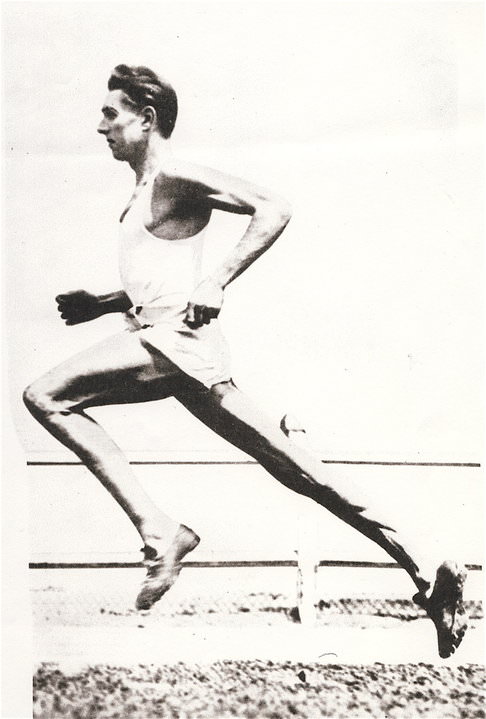
Jules Ladoumègue Profile
1906-1973
1.71 (5’7”) 59kg (130 lbs)

The famous photo of Ladoumègue
 showing his fine running form.


Running drills were always an integral part of Lydiard's training programmes and it is sad that most middle and long distance runners - in New Zealand anyway - have long forgotten the value of these: Very much to the detriment of injury prevention and performance.

Strong physiques, good drive off the toes, high knee lift: Impressive!


About this website 
The advice in these articles is given freely without promise or obligation. Its all about giving you and your family the tools and information to take control of your health and fitness.
Candida and Fungal Infections? Gary Moller recommends you explore this programme: Click Here!

Tuesday, July 24, 2012

"On the Run" Short Film about Lydiard and Running in New Zealand 1979


Click on this image to view the movie

This film showcases legendary running coach Arthur Lydiard's training methods through the example of his acolytes, including reigning Olympic 1,500m champ John Walker. 'Arthur's boys' (Snell, Halberg, Magee) scored attention by winning unheralded medals (two golds and a bronze) at the 1960 Rome Olympics. Lydiard later led the 'flying Finns' to similar success. His method revolves around building stamina to complement speed, and was influential in popularising jogging globally. Beautifully filmed, a doco highlight is Jack Foster's exhilarating scree slope descent.


Gary:
  • If my memory serves me right, the "Cave Man" runner in the opening scene is my team mate of the time, Gary Wilby, of the Victoria University Harrier Club.  Another "Gary", of course!  He was, and still is, very, very hairy.
  • What you see in the movie is a succession of incredibly well-conditioned male and female athletes.  Look closely at their wonderful muscle development.  There are no over-trained and under-nourished athletes to be seen.  They trained to a system and ate well.  And watch them run with great efficiency!  
  • This is back in the days when New Zealand really did inspire a sense of awe and disbelief in the running world.  I am getting overwhelmed with nostalgia.
  • Great to see a few shots of my sister, Lorraine, although a wee bit off the pace in the race sequences.
  • Look at the strength these athletes have in their legs.  There is not a hint of a flat-footed runner among them.  Look at the terrain they are training on - no manicured trails to be seen.  Agile!
  • Take special note at about the 6 minute mark.  There is demonstrated a largely forgotten pair of running drills - Hill-springing and hill-bounding.  And look at the muscles on the female runner demonstrating the drills.  Every runner, serious and recreational, should be practicing these drills as part of their weekly training.  I am in the process of getting back into running and several minutes of hill-springing are part and parcel of just about every run around the block.


_______________________________________
About this website
The advice in these articles is given freely without promise or obligation.  Its all about giving you and your family the tools and information to take control of your health and fitness.

Wednesday, May 23, 2012

Essential Reading for all runners seeking good running form


I watched the annual grueling Vosseler Shield cross-country race over Mt Victoria, Wellington, last Saturday.  It is interesting to watch cross-country for the first time in years.  Other than the near total absence of youth within the races, what really struck me was the poor hill-climbing form of the majority of the runners - even the top runners - as they laboured up the long, steep slopes.  Generally, there was little in the way of knee lift and the feet tended to collapse into the dirt.  The calf muscles and ankle sinews had no bounce at all in them.  Not by the 2nd lap anyway!  This represents a significant waste of energy. 

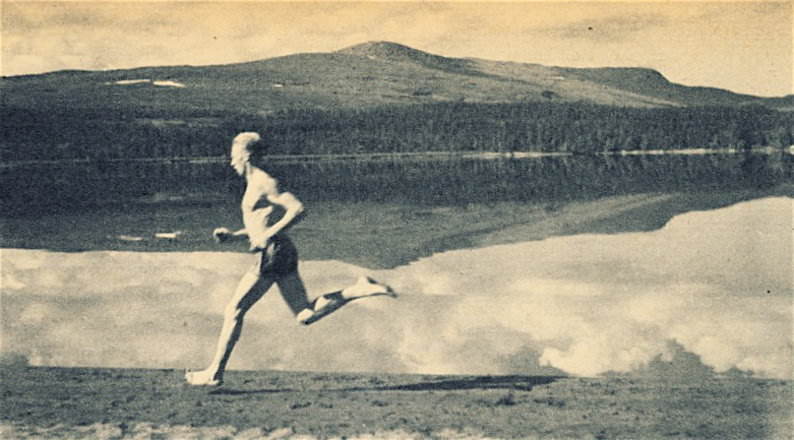
Pekka Vasala doing hill-bounding drills
The article here, by Nobby Hashizume of the Lydiard Foundation, is essential reading for all runners who are seeking to improve their running.  Pay special attention to the drills of "Bounding" and "Springing".  These drills are running exercises that strengthen the muscles that stabilise the body while running; they strengthen the feet and lower legs and train the sinews to absorb the impact energy during foot strike and then regenerate most of that energy as forward thrust during the push-off.


Pekka Vasala vs Keino - Running drills in action!


Have a look at this video for inspiration!
Of course, you will take note of the two Kiwi runners in the race (Sigh! Those were the Glory Days now long-gone!).


Pekka Vasala and the other great Finnish runners of that era were influenced by the Finnish National Athletics Coach at that time (None other than the great Arthur Lydiard!).

Sadly, it appears this essential set of drills and skills have been lost to most coaching repertoires.  I think the instigator of this is the loss of the side-line coach who has been replaced by the remote coach who has replaced the stopwatch and practical demos with a set of pro-forma training schedules.  I can not imagine teaching these training drills without that direct coach to athlete contact of day long gone.

_______________________________________
About this website
The advice in these articles is given freely without promise or obligation.  Its all about giving you and your family the tools and information to take control of your health and fitness.

Monday, December 14, 2009

Video of Drills to improve Running Technique

I have long been an advocate of running drills, especially for older athletes. As we age, we tend to lose good running form, transitioning over the years from free-flowing runners to creaky shufflers. This slow process of seizing up is much less to do with ageing and more to do with poor training structure.

As runners age they tend towards longer races and for training to be long, slow and all rather predictable.

It is all the more important, as we age, that we incorporate more speed and form work and less monotonous distance work. This should include weekly running drills. Running drills help maintain the stride length, leg speed, agility and strength. Whether you are training for a 4 hour marathon or a sub 20 min 5km race, this advice applies to you.

The video that follows demonstrates the basic running drills that all runners need to incorporate into their weekly training.


Your email address:


Powered by FeedBlitz


Do you have a question?
Email Gary: gary at myotec.co.nz (Replace the "at" with @ and remove spaces). Please include any relevant background information to your question.