Gary's new website

Showing posts with label mountain bike. Show all posts

Saturday, July 11, 2015

Some tips for safe and responsible mountain biking in New Zealand

An intrepid explorer of Wellington's wild South Coast with
a dirty bike.
I deliberately cultivate a personal culture of adventurism and risk-taking; but this is done with a reasonable sprinkling of care and responsibility to ensure I come out alive, injury-free and not endangering others such as rescuers.  So far this has worked in my favour with my worst accidents being in the city and the most disabling being within view of the hospital - and at low speed (mountain biking is my thing for now)! 

My partner, Alofa, exiting Barking Emu this afternoon
Come to think about it, what scares me the most about mountain biking is riding up a blind 2-way track which may have some out of control down-hill hoon come screaming round the corner!  That is a terrifying prospect and painful collisions do happen.

At the summit and about to drop down to Red Rock on
the South Coast
My record of being a safe and responsible mountain biker was put to the test a few days ago when I went into the South Coast of Wellington on the tail end of a storm.  All went well until I rounded a corner, only to be picked up by the wind and thrown over a huge drop similar to what you can see in the pictures.  While I was not hurt, I was unable to get back onto the track due to the ferocity of the wind.  It was impossible to even crawl!  I finally managed to regain the track only to be blown back over again along with my bike.  For a while I thought I was in deep trouble.  However, I managed to clamber around the hill side with my bike until I was out of the wind and able to get back onto the track.  Then it was reverse direction back home safe and sound!

Being winter here is what I carry in a small back pack, in the back of my cycling jacket and on my bike:
Compulsory selfie

  • Various tools for emergency repairs including a spare tube, pump and gas canisters.
  • Beanie
  • 2x jackets in addition to long sleeve cycle jacket and underclothing.  
  • Winter booties.
  • Survival blanket.
  • Some energy food and water.
  • Emergency locator beacon and cell phone with a full charge.
If I am going out alone I always tell someone, usually my partner, Alofa, my route and I am reluctant to change plans part way through and will often phone to advise of the change.

Wellington is mountain bike heaven but it can also be mountain bike hell if the weather is against you.

The trail in the distance down to Wellington's South Coast.
Yes, I got caught out the other day and it could have been much worse.  There is one decision I made that was dead right and that was to turn around and go home.  When tired and going downhill, it is so easy to take the easy option which is to head down - not back up.  If I had done that it would have been like entering an eel trap and the result would not have been good.


A breath-taking ride on a fine day.
The photos to the right are from our ride this afternoon over the hills above Wellington and down to the wild South Coast.  With riding like this outside our front door I am not about to leave Wellington anytime yet.  Its simply amazing!


Best riding you'll find anywhere


Mountain bikes can go just about anywhere

The South Coast beckons

Looking back to where we came from

Alofa walking the drop-off at the end of the track
Wellington's South Coast


Its a very busy day with crowds visiting the seal colony

Chatham Islands ahoy!  On my bucket list.

Friday, September 05, 2014

National Radio Interview with Bex Houston

Here's a radio interview with Bex Houston, one of the pillars of my local cycling club - Port Nicholson-Poneke (PNP for short):


About this website 
The advice in these articles is given freely without promise or obligation. Its all about giving you and your family the tools and information to take control of your health and fitness.
Candida and Fungal Infections? Gary Moller recommends you explore this programme: Click Here!

Wednesday, May 21, 2014

Here is one of the tracks I ride often


About this website 
The advice in these articles is given freely without promise or obligation. Its all about giving you and your family the tools and information to take control of your health and fitness.
Candida and Fungal Infections? Gary Moller recommends you explore this programme: Click Here!

Saturday, November 16, 2013

Mountain Biking 101: How to do a skid pan test

Perhaps the number one challenge when riding a bicycle over varying terrain, at speed, is figuring out just how much traction one has at any moment.  Especially when going down hill.

This is where regular skid pan testing is important.

 The following is a visual presentation of such testing on steep, rocky terrain, such as found in Wellington.


Method:

  • Take one very expensive bike and one willing (stupid/cocky) person.
  • Choose Your testing ground (preferably very steep and rocky - of course!).
  • Hurtle down the slope at high speed, choosing carefully your skid pan test point (when and where you apply the brakes).
  • Apply brakes.
  • Close eyes.

Assessing your results:

  • You remain either upright or not!

Protective gear worn during test:

  • Helmet
  • Safety glasses
  • Rash guards on shoulder and hips
  • Two layers of lycra shorts
  • Rugby vest with impact padding
  • Gloves 

Other:

  • Place sex life on indefinite hold.

The following is a visual record of a human skid pan test.


Shaved ham anybody?


NB: Ensure no scratches on frame by sacrificing body beneath cycle at moment of impact

Alternative title for this post 

(as suggested by his very understanding partner, Alofa)

"Gary's mountain bike crash: Number 101"


About this website 
The advice in these articles is given freely without promise or obligation. Its all about giving you and your family the tools and information to take control of your health and fitness.
Candida and Fungal Infections? Gary Moller recommends you explore this programme: Click Here!

Wednesday, September 12, 2012

Do you want to buy a really good Mountain Bike?

This is arguably the fastest and lightest 26" full suspension race bike on the market! Its retail price was nearly $12,000 

Evidence it is a fast bike: I rode this bike when we set the team relay record for the Huka Challenge: Huka Relay: Fastest Team - Moller Family - 4:52:39 (2010) http://www.cyclechallenge.com/results/records-and-achievementHuka *0km Records

Weight is in the low 9Kg range depending on the tyres. 
Merida 96 Carbon Fully

Here's the link to place a bid or Buy Now!


_______________________________________
About this website
The advice in these articles is given freely without promise or obligation.  Its all about giving you and your family the tools and information to take control of your health and fitness.

Sunday, August 12, 2012

How to effortlessly fit a tubeless tyre onto a mountain bike wheel

Are you sick and tired of continuously struggling to fit a tubeless tire? Gary Moller, demonstrates how to easily fit a tire in just minutes. The tire being fitted is a Continental Cylocross tire which does not have the rimming that for tubeless fitting that is standard on most quality
_______________________________________
About this website
The advice in these articles is given freely without promise or obligation.  Its all about giving you and your family the tools and information to take control of your health and fitness.

Wednesday, June 13, 2012

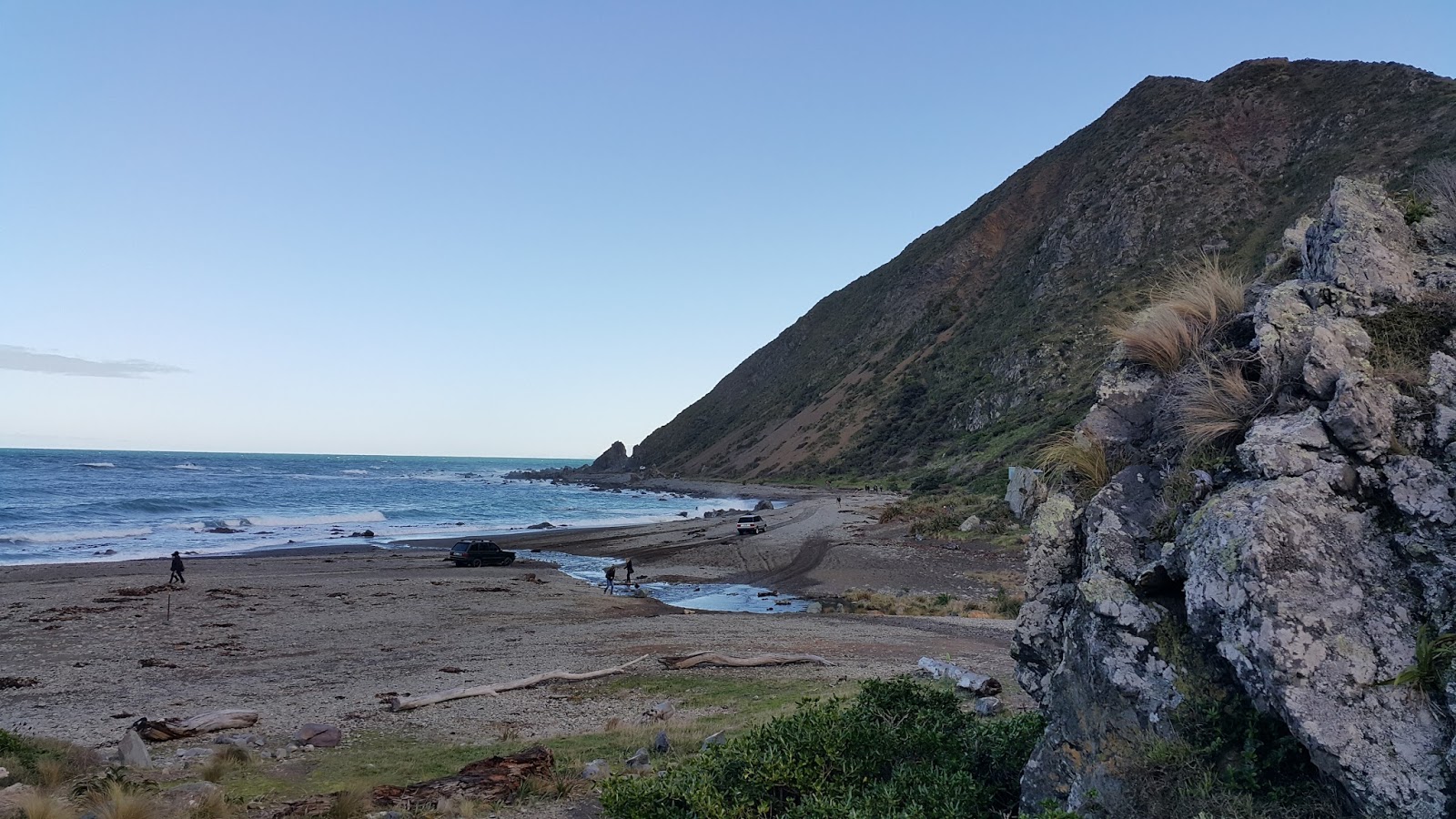
Wellington's South Coast After a spectacular Storm Surge


Nothing left of the 4wd track.
 If you are thinking of going for a bike ride or walk to Red Rocks on Wellington's South Coast, I suggest you leave it a few days.

The storm surge this morning has devastated the coastline.

I went for a bike ride a few hours ago down Long Gulley to Red Rocks and back up Happy Valley.

4wd trail goes round the headlands.
The 4wd road has been obliterated in places and the seas are still monstrous.

I was lucky at one spot where the waves got me and my bike, swamping me to my knees!

Stormy seas.
Yoiks, yonder!

The road from the seal colony - or what's left of it!
Stormy seas hindering my progress
 (Wellington City in the background).

Almost impassable - even for  4wd's.

Where's the road?  This is hard cycling!

WCC Works Dept cleaning up Owhiro Bay.  The waves
reached several properties across the road.


_______________________________________
About this website
The advice in these articles is given freely without promise or obligation.  Its all about giving you and your family the tools and information to take control of your health and fitness.

Tuesday, August 16, 2011

More Wellington Snow than ever!


I had to take the van in for a service, so there was only one way home and that was on the bike in a very round about way - Slip-sliding up to Karori, over Makara Peak and then onto Hawkins Hill. Snow, snow and more snow the whole way!

It was hard work and there were a few minor slide-outs but no damage done.

What a great way to start the day in Wellington City! Here's the link to the rest of the photos.

_______________________________________
About this website
The advice in these articles is given freely without promise or obligation. Its all about giving you and your family the tools and information to take control of your health and fitness. Please give me your support by subscribing to my free email updates. Please shop at my Online Store. Please encourage your family and friends to do the same. While we may not always be able to compete with the big operators on price, we aim to more than compensate through personal service!
Your email address:

Powered by FeedBlitz
Do you have a question? Email Gary: gary@myotec.co.nz. Include any relevant background information to your question. Please be patient and be aware that I may not be able to answer every inquiry in detail, depending on workloads (My paying clients take precedence!). I will either reply by email or, most likely, by way of an article (Personal identifying details will be removed before publication).

Thursday, May 26, 2011

How to combine mountain bike training with mountain running

Gary competing in the Wainui 6hr Worldz 2011
Photo: Jono Baddiley
"I would like to ask you, if I could effectively combine mountain bike training with mountain running, to successfully compete in both.
Would you recommend lifting weights additionally, to increase the maximum strength and power output?"
________________________
Gary:

Mountain bike training and mountain running are perfect partners - I could not think of a better combination.  Its what I practice personally.

Running straight up a mountain requires enormous endurance in the thighs, calves and buttocks.  Mountain biking stresses these muscles perfectly.  Running uphill and mountain biking are "concentric" exercise forms and are therefore unlikely to cause significant post exercise muscle soreness.  Recovery between workouts is therefore quick as compared to recovery following running downhill which is eccentric in nature and, therefore guaranteed to cause muscle soreness.

Fitness Rules of Thumb
The general rule of thumb for improving an aspect of fitness, such as strength or endurance is to do between 3-5 workouts per week.  To maintain the fitness gained, it is necessary to do 2-3 workouts per week.

The other rule of thumb to follow is to do blocks of activity of 6-8 weeks, followed by a short relaxation period of not longer than a week before commencing a further build over several weeks.  So, if working on improving endurance, you would do 6-8 weeks of mostly endurance training, doing 3-5 sessions per week.  After that block is completed, you would switch to say, an emphasis on strength, power and speed for 6-8 weeks of 3-5 sessions per week, while continuing with 2-3 endurance sessions per week.

Of course, unless you have heaps of time and energy and are really, really serious (Like a pro athlete), you would probably end up doing the minimum of three sessions plus two to maintain what was previously worked on.

So, if we apply this to mountain running and mountain biking, - and I would be inclined to keep things really simple - I would begin by first picking the discipline which is the most important to work on over the next 6-8 weeks.  Let's say it is mountain running because there is the Mt running champs in 8 weeks from now.  So, the programme would be mostly off road with hill running 3-5 sessions per week with 2-3 rides on your mountain bike between the running.

After the running race is done and dusted, I would then back off the running to just two per week and amp up the cycling for 6-8 weeks and target a mountain bike event.  Got the idea?

Take care not to burn out
By default, Mountain biking can be very intense without intention.  It is so easy to end up maxing out grunting up a steep and rocky slope that is on the limits of your gearing and fitness.  Take care not to burn out by ensuring that a ride that is intended to be "easy" is, in fact, easy.  When doing high volumes of training, it is really, really important to ensure that there is a careful mix between high intensity and low intensity training sessions and the big emphasis is always on recovery between sessions.  This is where athlete nutrition and massage are so critically important There are lots of articles on this blog about these two topics).

Do I recommend strength training - Yes!
The best strength training of all for mountain bike and mountain running is to do drills, on the bike and running, that develop speed and power.  Drills like intervals, fartlek and repeat hill climbs can be adapted for both running and cycling.  The most enjoyable benefit for running from incorporating mountain biking into your training is you will have boundless strength and power to stride up the steepest and longest of slopes.

Some upper body strength is desirable when mountain biking, mostly to resist the constant slamming of the arms and shoulders onto and over the handlebars when hooning down rocky slopes and hitting the bottom of deep drop-offs at speed.  Strong shoulders and forearms are handy as well when there is unplanned hitting the dirt which is a part of life when doing either or both of these crazy activities.  Upper body strength can be built and maintained by working out in a gym twice a week.  This does not have to be a commercial gym - all you need is a barbell set, mat, bench and chin-up bar and you are away.

When an injury happens
Should you suffer an injury, as will surely be the case on more than one occasion when doing these sports, then switch immediately to alternatives activities.  For example; if you sprain an ankle while running, then stop running for at least four days while continuing with cycling and gym.  The gym and the biking, which may have been twice a week each at the time of injury, are upped to 3-5 per week for as long as it takes to be back into freely running.  This way nothing is lost by injury.


_______________________________________
About this website
The advice in these articles is given freely without promise or obligation.  Its all about giving you and your family the tools and information to take control of your health and fitness.  Please give me your support by subscribing to my free email updates. Please shop at my Online Store. Please encourage your family and friends to do the same. While we may not always be able to compete with the big operators on price, we aim to more than compensate through personal service!


Your email address:

Powered by FeedBlitz
Do you have a question?  Email Gary: gary@myotec.co.nz. Include any relevant background information to your question.  Please be patient and be aware that I may not be able to answer every inquiry in detail, depending on workloads (My paying clients take precedence!). I will either reply by email or, most likely, by way of an article (Personal identifying details will be removed before publication).

Saturday, April 30, 2011

Hiking or Mountain Biking? Your cell phone could save your life - Updated

"If you own a cell phone, bring it on every hike. Before you leave, give your phone number and service provider to your check-in contact. Plus, don’t think that a cell phone or GPS is a substitute for a good map and accurate compass. Keep your phone turned off during the hike, but power it up occasionally to check for service (and to drop some digital breadcrumbs). If you become dangerously lost or injured, dial 911 even if you don’t have strong service. For better service, head for higher ground—cell phones operate by line-of-sight radio waves. And finally, just be careful out there."

With more and more mountain bikers going into more and more isolated terrain and track like the Heaphy opening up for cycling (During the winter!), we can expect more people to be getting into trouble in the Great Outdoors.  This article is an interesting explanation about how technology is ahead of how we think cell phones work in "non-service" regions.

In New Zealand, don't dial 911 - dial 111.
Full article here explaining why your phone may save you even when there is no service.

And guess what?  The same day this advice is posted, we get this reported about a mountain biker who had, unbelievably, been attempting a Southern Crossing of the Tararuas:

"On Wednesday, the missing man made contact with us via cellphone. He was in a distressed and hypothermic state, uncertain of his exact location. Due to extremely bad weather conditions, rescuers were unable to be flown to where they suspected the man might be, instead being dropped off in a riverbed some hours away."

Read the news item here.

_______________________________________
About this website
The advice in these articles is given freely without promise or obligation.  Its all about giving you and your family the tools and information to take control of your health and fitness.  Please give me your support by subscribing to my free email updates. Please shop at my Online Store. Please encourage your family and friends to do the same. While we may not always be able to compete with the big operators on price, we aim to more than compensate through personal service!


Your email address:

Powered by FeedBlitz
Do you have a question?  Email Gary: gary@myotec.co.nz. Include any relevant background information to your question.  Please be patient and be aware that I may not be able to answer every inquiry in detail, depending on workloads (My paying clients take precedence!). I will either reply by email or, most likely, by way of an article (Personal identifying details will be removed before publication).

Sunday, August 22, 2010

Here's a multi sports race in Australia worth doing: Snowy Hydro Upper Murray Challenge

Aerial view of Corryong Victoria Australia fro...Image via Wikipedia
Khancoban-Corryong, Australia
Saturday, 2 October 2010

Don't put it off any longer, join with some friends, enter a team and experience the amazing camaraderie between all competitors and make Saturday 2nd October 2010 the date to experience the combination of a realistic challenge, great prizes, showbag, food and true country hospitality.

Visit www.uppermurraychallenge.com for all the details. With only 7 weeks to Saturday 2th October, entries are flooding in for 8th running of the classic Snowy Hydro Upper Murray Challenge, which is widely regarded as Australia’s most scenic and challenging one-day multisport course, from Khancoban to Corryong.

Thursday, August 19, 2010

I have bruised the bone on the inside of my knee and it won't heal

Left knee-joint from behind, showing interior ...Image via Wikipedia

Image via Wikipedia
Back in the summer I fell off my mountain bike and smacked the inside of my knee on the top tube, I guess I bruised the bone and it has been sore ever since. It’s pretty boney in there, which is sore to touch. I have rested it, iced it, massaged it, antiflamed it, stretched it just about everything I can think of. It doesn’t appear to be a tracking problem, the actual knee and kneecap seem to be running freely, just stiff and sore on the inside of the knee when straightening. Any ideas?


______________________________________
Gary:
The injury appears to be either the medial ligament or to the adductor tendon where it wraps around the medial tibial plateau.  Both these injuries can be very slow to heal.  Incidentally, I wiped out on by mountain bike on the weekend and suffered the very same blow to the side of the knee!

Treatment is as follows:

Saturday, May 09, 2009

New Zealand - Outdoors adventure playground


Your email address:


Powered by FeedBlitz


Do you have a question?
Email Gary: gary at myotec.co.nz (Replace the "at" with @ and remove spaces). Please include any relevant background information to your question.

Tuesday, March 04, 2008

Now here's a cycling race worth doing!

A non-stop, 4000km, point-to-point bike race from Canada to Mexico along the Continental Divide. Check out www.greatdividerace.com for the details and an inspiring slide show of what's on offer. It's nearly all on gravel roads and 4WD tracks. A total of about 200,000 feet of climbing. Unsupported (ie: no course marking, no drink stations, no support crew of any kind). Solo - no drafting. No entry fee and no prizes.

Now who would be so crazy as to enter an event like this? Well there is one such person who it happens, I am sponsoring: Non other than Simon Kennett of mountain biking fame! My job is to help knock his body into shape in the time left before the gun goes off. That's not much of a challenge really when you have such wonderful talent to work with.

Here's just some of 40 year old Simon Kennett's achievements:

- Co-author of Classic NZ Mountain Bike Rides 2008 - 1st Akatarawa Attack MTB Orienteering (8hr division)
2007 - Wellington MTB Orienteering Champion
2006 - 8th Pro-elite Karapoti Classic
2004 – NZ Master 1 MTB Champion
2003 - 1st Mt Peel MTB Marathon
1997 – NZ Master 1 MTB Champion
1996 - 1st Nelson to Christchurch Cycle Race
1991 - 2nd NZ MTB Championships
1990 – NZ Hillclimb Champion
1989 - 1st Expert USA Hillclimb Championship
1988 - 1st Karapoti Classic

Here is Simon's Blog where you can track his preparation for the big event and even get involved (He's looking for pledges for his charity: Medicine Sans Frontiers).

Monday, January 28, 2008

Gentle Annie 2008 - putting my $15 glasses to the test!

I rode the Gentle Annie for the second year: 80 km of gravel and big, big hills from inland of Taihape across the volcanic plateau finishing West of Napier.

I did not enjoy it this year; I was tired from the start. And it drizzled on and off the whole way, turning the course into slurry. At times I felt as if I was riding in porridge. It was so hard!


But let's talk about glasses: I wore my $15 3M safety glasses and was so thankful. There was a constant spray of abrasive sandy slurry with the only thing between this stuff and my eyes being the glasses. Thank goodness I was not wearing a $200 pair of designer glasses!

Every now and then, as I passed my support vehicle, I swapped glasses for a clean pair. It worked well.

Four wet and sludgy hours later and another 10 km or so to go, I was shot. With just three training rides in the bank after breaking my wrist, I just did not have enough gas left in the tank. I took off my glasses to put them in my back pocket; but I was too cold, tired and stiff to do so. Fiddle, fiddle, fiddle as I wobbled across the gravel tracks, finally dropping my glasses onto scoria. That meant having to do the the worst thing imaginable: Stop and go back to pick them up! As I did so, the riders ahead disappeared over the horizon. It is amazing how much momentum one loses in such circumstances.

Anyway, In finished in 14th place, down from 3rd last year. The feed at the finish was the best of any event I have ever attended and the prizes impressive (I did not win any - damn!). The $15 glasses turned out to be fine other than a few scratches and will live another day.

The Gentle Annie is a great event for both serious and beginner cyclists and I thoroughly recommend that you put it on your list of things to do this time next year.

Saturday, September 15, 2007

Problem with stomach acid, bloating, leaden legs and loose bowels while mountain biking

"Hi Mr Moller Looking for a bit of advice on a problem I am experiencing while mountain biking.

Photo. Why we love to mountain bike: Alofa and Ioasa Kosena mountain biking the Wairarapa coast

I start my rides generally at a pace of about 20km on reasonably flat terrain and then after about 5km start heading into hills and reasonable climbs. The problem is after about 30mins of reasonably hard riding my stomach turns to acid,bloating occurs and legs etc turn to lead and sometimes end up vomiting. The next day my bowels are very loose and rather smelly. This does not happen all the time but is very frustrating when preparing for an event or in one as it usually means the rest of the ride or event is real struggle."
"W"

In response to questioning from Gary Moller:

"Drinking water before and during ride and as the case yesterday usually had a couple of plain mixed grain rolls about 30 mins before setting out.

The rides are usually about 2 to 2 ½ hours long
My age is 48yrs,75kg and am 1.7m tall.

My health is excellent as recently had a checkup and am on no medication of any kind.

Tea the night before was plain pasta,lunch that day was three plain mixed grain rolls and breakfast was 3 pieces of plain toast and interspersed with 1 pear and 1 apple.

Fluids were about 2 litres of water and 3 cups of tea with 2 spoons of sugar in each and sneaked in small bar of chocolate. Am careful of my food as regards preservatives and try to avoid to many processed foods also.

Not a vegetarian but do not eat a lot of meat perhaps twice a week.

Just plain pasta as in straight out of the packet with a home made sauce made of tomato and onion. Toast with no topping .

Have a theory of my own would like your opinion on. Could it be build up of lactic acid from the exercise and my body not being able to deal with it?
____________________________
Gary Moller advises:
I doubt very much if the problems you describe are due to lactic acid build-up. The most likely cause is a poor diet that is mostly devoid of nutrients. Of course, I am making these statements based on the snap-shot you have given; but I will make the comment that a healthy person, let alone a 40+ year old doing 2-3hr mountain bike rides, needs a consistent daily infusion of thousands of different nutrients. While other days that are nutrient rich may be around the corner, there is a real danger that your diet is leading down a path that will only result in very bad health crash.

The feelings of acidity and vomiting that you describe could be explained by your poor diet. Let me explain why:

Your liver produces bile which is a bitter liquid that is used by the body to emulsify and help digest fats in your diet. The liver produces a steady dribble of bile that is stored in the gall bladder. When a fatty meal is consumed the gall bladder is stimulated to release the bile. If you are on a low fat diet, which you appear to be, then one must ask what happens to the bile that builds up in the gall bladder, especially overnight? Well, it just sits there and does nothing except accumulate more and more. Then you go out riding - heart racing, lungs pumping, smashing your way downhill - and that bile just sloshes about. Eventually, like a child who fails to get to the toilet in time - it releases and you end up with a gut full of bitter bile, some of which is regurgitated because it has no useful purpose at the time. this is a recipe for an eventual health disaster and action must be taken to correct things.

My advice is to consult an experienced nutritionist in your area to help you work out a suitable diet that suits your lifestyle and personal dietary tastes. I will offer the following general comments:

Fat is good for you. You can not live without fat. As an athlete you need more fat in your diet - not less. Fat is also essential for the supply and absorption of many nutrients including the fat soluble vitamins - A, D, E and K. Without these you get sick and die.

Pasta and bread made from white flour are not good for you in anything other than small amounts. There is little nutritional value in them and they only serve to gum up the digestive tract. It is the ingredients that go on them that is nutritious - butter, olive oil, tomato, meat fish, cheese, onions, garlic, peppers etc, etc - all in copious amounts. So go easy on the bread and pasta and big on the toppings.

Sugar and honey are simple sugars that should only be consumed in very small amounts. Too much may set you up for increasing insulin resistance and even type II diabetes. This warning applies, as well, to a diet that is excessively rich in bread and pasta. Digestion is such that the starches in these foods are converted to simple sugars almost from the moment they are mixed with saliva. For carbohydrates, you should seek a wide mix of sources, including root crops such as kumara, taro, pumpkin, bread fruit and potato.

Get more protein (along with fat) in your diet every day. Your body needs protein for a myriad of jobs, including repair following your rides and for building strong muscles.

Get more fresh vegetables and fruit in your diet. Pears and apples are kind of ok; but there must be more variety including plenty of the brightest, greenest and reddest. Berries, peppers, carrots, brocolli and so on. Fresh is best and lightly cooked or raw.

Drink only as much water as you require to replace body weight lost during a ride. Please read my many articles and E-Publications on endurance training which explain the importance of hydration without excess.

Thursday, August 09, 2007

I am getting headaches when riding my mountain bike

Hello,
I have recently come across your blog and I am impressed. In the world of misinformation you are providing real world advice. Thank you.

I am a mountain biker that has been riding for a couple of years and am getting to a point where my longer rides are taking 2 to 4 hours long. These are generally adventures in some back country somewhere but not always. My problem is that I am getting headaches on these long rides which last the rest of the day. I do not notice them if I am moving but I notice them when I stop.

I used to be a competitive swimmer (which I gave up 8 years ago and got fat till starting mtb again) and was training for 2 to 3 hrs 10 times a week and never experienced this. It seems to happen more when climbing hills (maybe because I am overheating, or sweating more, or exerting more). I have had shorter rides in the heat where it has happened as well. However it doesn't seem to matter how much water I have they still happen.

Could it be that I am not getting enough sodium or electrolytes? I am going to start experimenting with good endurance drinks to see if that makes a difference, however the ride yesterday it didn't stop the headache (but it did stop my usual bonk around 3 hrs). I had a Horleys made up drink 750mls and a new mizone (higher carb one) and 2 litres of water over a 3 hr trip time but 5 hrs ride time. My head was buggared and very tired by the end and got progressively worse during the evening. It got better after I had some meatballs, bread and panadol, but my head was very tired, and still is today.

I am about 183cm high and 96kg. I don't drink much caffeine as it makes me jittery and ruins my sleeping pattern, however a cup or two of Dilma english breakfast tea a day has been nice. Usually in the mornings or afternoon though. I have to admit sometimes I have had lots of caffeine though, however I have not noticed a correlation to these rides. Maybe though.

No neck or shoulder injury ever.

The two rides that I remember were on the weekend. My head ache disappeared after the food and the panadol, however my head was still very tired. I was probably dehydrated but on other times I haven't been able to keep up enough fluid to stop these headaches. I feel like drinking coffee after it to make my head feel better. It feels like when I get the flu sometimes, when you get a headache and a fuzzy tired head.

The other recent time I got this was up in hanmer for 2 days. The first day I got a headache for the rest of the day and no matter how much water I had (I was up all night peeing!!) I could not get rid of it. I did not have any panadol then though so I had to live with it. The next day I was fine. Over night sleeps seem to get rid of it. The next day we rode and I didn't seem to get it, which is curious as we were out for longer. The only difference was that I had a normal Mizone that day and we went on a track that was more climbing than mtb. We were literally pushing our bikes for hours.

I was also thinking that I get light headed when standing up (at random times, not when biking) when I have been doing a lot of biking at the moment. My doctor wasn't worried and thinks its just typical low blood pressure or something that people get when training a lot.

So my question is, do you know of any other athlete who is having similar problems? What the solution might be, if its a quick fix or do I need to go get a check up by somebody (maybe bloody work, blood pressure etc).
Jono
_____________________

Gary Moller comments:
Jono: There are several possible things going on here and without seeing you in the flesh, we are reduced to making some educated guesses. The advice that follows needs to be applied with a touch of common sense and try to consult the various experts in your area who might be able to help you apply this advice. No harm should come from any of this advice. In fact, you should become fitter and healthier even if some of the measures suggested end up having nothing to do with the head aches!

Mountain Biking is hard on the neck
Prolonged hill climbing is inherent in the sport and this can cause a kink in the neck, cramping the neck and shoulder muscles and jamming the nerves. This can cause migraine-like headaches. This is exacerbated by the seat and stem and handle bar setup on your bike not being quite right. Even a few mm of adjustment can make a world of difference. Cross-country bikes are a compromise between design for climbing and design for descending and it is a real art to get the adjustment right for different body types, sizes and riding ability. Being a full suspension bike, you might find even the slight sag in the tail while hill climbing has your seat position such that you are having to pull excessively with the arms and shoulders. With your body weight, the sag could be very significant. Try locking out the rear suspension when doing long climbs and see if there is a difference.

When climbing all but the steepest hills, you should be able to lean forward on the handlebars with the palms resting relaxed without the hands having to grip the bars. If you can't do this then look at your climbing technique and get a bike setup expert to adjust your setup, including set post, seat angle and handle bar stem length. I do this for cyclists in Wellington.

After climbing and kinking the neck and straining the shoulders while climbing there is usually a period of high speed slamming your way downhill. The tired neck muscles have to work very hard holding that heavy bowling ball on your shoulders steady so that you can see where you are going! As you can imagine, the neck and shoulders can become cramped and exhausted from all of this punishment and it is hardly surprising that you develop headaches a few hours into a ride. Other than checking the softness of your front and rear suspension to smooth the big hits, there is little to be done with the bike. Read on.

Low Blood Pressure (Postural Hypotension)
It is common in athletes to suffer semi-blackouts when standing up quickly. This is most often attributed to dehydration. I disagree in most cases. This condition is most often associated with an irregular pulse and aching muscles or muscles that have painful knots in them. This can be indicative of mineral depletion, principally magnesium which is essential for cellular function, including muscles and nerves.

Low magnesium shows up as weak muscles, muscles that are painful to press and prone to cramping and aching. Low magnesium is a factor with irregular heart rate and low blood pressure. It is likely that adrenal function is low. An associated factor is vitamin D deficiency which is a certainty among student cyclists living down South. Vitamin D supplementation is cheap and safe.

Drinking lots of water, even if it has some electrolyte in it, may add to the problem by flushing out mineral salts from the body.
Try a course of mineral supplementation with added magnesium with a complementary quality B Group vitamin supplementation. The benefits, if any should be obvious within a few weeks.

Go easy on the sugars and refined carbohydrates
I would go very easy on the sugary drinks as well because they are shocking for teeth and gums. Your athlete diet should be low in sugars and refined carbohydrates and high in quality whole natural foods.

Read my e-books on endurance training and train your body to run on its reserves. You should be able to ride three hours on pure water only with no need for sugary stuff. If you are a junk food addict then you could be suffering killer sugar lows as the ride progresses despite the sugar drinks. As blood sugar plummets, you will ache terribly, including the neck muscles and may develop headaches. You will feel weak and concentration and decision-making will suffer.

Drinking far too much
When riding up a hill you may quickly become drenched in sweat. This is partly because of the extra hard work, but also because there is little or no airflow to evaporate the sweat. You may get the impression that you are losing sweat by the gallon; whereas the truth is it may be just a a few cups worth during the climb.

If you drink too much water before, during and after a ride then you may be placing your health at risk. That you described having to get up several times in the night to pee is a sure clue that you might be drinking too much.

Excess fluid flushes critical minerals and other nutrients, like the water soluble vitamins, out of your body. More dangerously, you risk developing hyponatraemia (I call it soggy body syndrome or SBS). One of the symptoms of hyponatraemia SBS is headache and the other "heady" symptoms that you describe.

Drink only what you need to stay hydrated and no more. Ignore the experts and the sports water companies who advise you to mimic a fish. Learn to go by thirst (I know this advice will cause howls of protest in some quarters; but let's be sensible for once!). Hyponatraemia SBS kills healthy athletes, so it is irresponsible to give the impression that guzzling endless gallons of water is essential for sport and a cure-all for everything.

You might like to get a gauge of fluid loss during a ride by weighing yourself before and immediately after a ride. After deducting a Kg for each liter drunk during the ride, you can tell exactly what your fluid requirements are. You might be surprised at how little water you actually need during a ride. A 2-4% overall weight loss during a ride is fine and your body will get used to it with time.

Caffeine withdrawal
As with bottled water, sports drinks and carbo gels for athletes, do not believe everything that is churned out by the commercially driven research! Caffeine is not all peach and cream. It is a highly addictive drug and you might be hooked!

One reason headaches and migraines and generally feeling rotten happens more often during weekends is because the routine of caffeine ingestion is interrupted. While the amount of caffeine is a factor, so is the regularity of ingestion. If you take a even small amount of caffeine daily, then your physiology adjusts to that. If you then get up early for a long ride without your scheduled caffeine shots, it is possible that you will start to suffer the aches and pains, headaches and loss of energy and concentration that is part of drug withdrawal.

Please read my articles about caffeine, including the guidelines for assessing your possible addiction to caffeine and follow the advice for getting yourself free of caffeine's grip on your physiology.

Possible neck and shoulder problems
I have worked with a number of top swimmers over the years and shoulder and neck problems abound. While flexible and loose is beneficial and common, this does not mean that a swimmer is not without painful knots and inflammation. These do not disappear with rest and can bother an ex-swimmer years later with neck and shoulder pain. This pain can be in the form of tension headaches due to irritation of the nerves that supply the forehead and scalp.

Jono: Being a student, sitting for long periods, staring at a screen all day, just adds to the tension. As does slamming and rattling the skull for several hours on a mountain bike and kinking the neck during steep hill climbs!

The solution is all of the above, plus a course of deep tissue massage of the shoulders and neck. Generally, you need three sessions per week each lasting about an hour for a few weeks. This can then reduce to about twice a week for a few more by which time the muscles (assuming they need working on) will be in fantastic condition. If in Wellington, I provide this service. I am not sure of who you can see down South. Look for an experienced massage therapist with suitable qualifications. You need a person with strong hands who is prepared to spend the time and effort without hurting you. A brief tickle and rub might feel great; but will do nothing of lasting benefit.

So, Jono, now you have much to work on. It is a bit like playing detective with your body. Please let me know how you get on and let our readers know what works and what does not.

Sunday, May 20, 2007

Ioasa goes for a mountain bike ride

Join Ioasa for a typical mountain bike ride on a typical Wellington day. Skirting the perimeter hills of Wellington City, the mountain biking capital of the world, Ioasa rides non-stop for three hours of stunning views, clear skies and sunshine, miles of single track, grunty uphills and thrilling downhills. All of this and more overlooking the central city.


Monday, March 05, 2007

Bookmark this adventure for 2008

On January 27th we completed the 80km ride from inland of Taihape through the Central North Island Plateau to inland of Napier. It was through awesome country side up and and down equally awesome gravelly hills.

Organised by Andrew Ninnes and his team of volunteers, this inaugural event goes down in my book as one of the most memorable and enjoyable bike events I have ever done.

It was a relaxed event with most of the participants being novices doing it for the scenery and the challenge just to finish. As per usual, there was the handful of hard out fanatics who had to go as fast as they could (I confess - I was one of them). But I still managed a quick swig of the free brewed coffee on offer at the half way point. The overall winner was the appropriately named Steve Pedley.

I did the whole distance according to heart rate. I had worked out that I could do 80km of mountain biking at about 140-150 beats per minute with the upper limit being 160 beats. So that is how I rode the hills and the flats, only once hitting 160 beats. I was in about 25th place by the halfway point and finished strongly to be 5th overall. Not too bad for a guy in his 50's if you don't mind my saying. I drank approximately 2 liters of water and ate about 4 caramel bars which I gobbled down at the crest of the big hills before picking up to speeds of 60-80 km/hr on the massive winding descents. What a thrill! Despite the huge hills and the heat, I finished without any cramps at all - only a raw arse from all the bone rattling ruts. I put my performance down to improvements in diet over recent years and being much smarter with training and racing.

The race finished at the Waiwhare community centre, a converted rural school. There we lazed in the shade and paddled in the refreshing swimming pool. The locals put on the healthiest spread I have ever had at any sporting event and there was more food than anybody could eat.

The prize pool was impressive and I was astonished to win the spot prize - a $1,400 spinning bike donated by Action Wheels of New Plymouth. In fact, the bike was of such a good quality, I have arranged to sell them on my website (keep an eye for them as I bring them on line).

This was a wonderful event through one of the most remote and scenic areas of the North Island. It was impeccably organised and so relaxing from start to finish. It was almost an embarrassment to appear to be riding hard out in such picturesque surroundings.

We will be there next year - and we will be looking out for you!

Monday, February 19, 2007

Here's a mountain duathlon worth doing

If you are training up for an event like a marathon or just wanting to get really fit, a good strategy is to do a variety of challenging events that:
  • Makes training varied and interesting,
  • Gives you a really good incentive to get out and do the training,
  • Makes life an exciting challenge,
  • Gets you into the great outdoors and:
  • If you get injured or fall ill the day before the big event of the season, all is not lost - you had a damn good time getting there!
Wairarapa Multisports Club in conjunction with the Masterton Tramping Club presents the 20th Annual Wairarapa Mountain Duathlon Sunday 4th March, 2007 10.00am Start from Clareville Showgrounds.


The race consists of a bike to the base of the mountain and then a steady 10km out and back run and then cycle to the finish. There is a short course option. Although I am pretty good on a bike, I am teaming up with a mate who is doing the cycling and I will concentrate on the run. Great fun, great training and great country-side!